
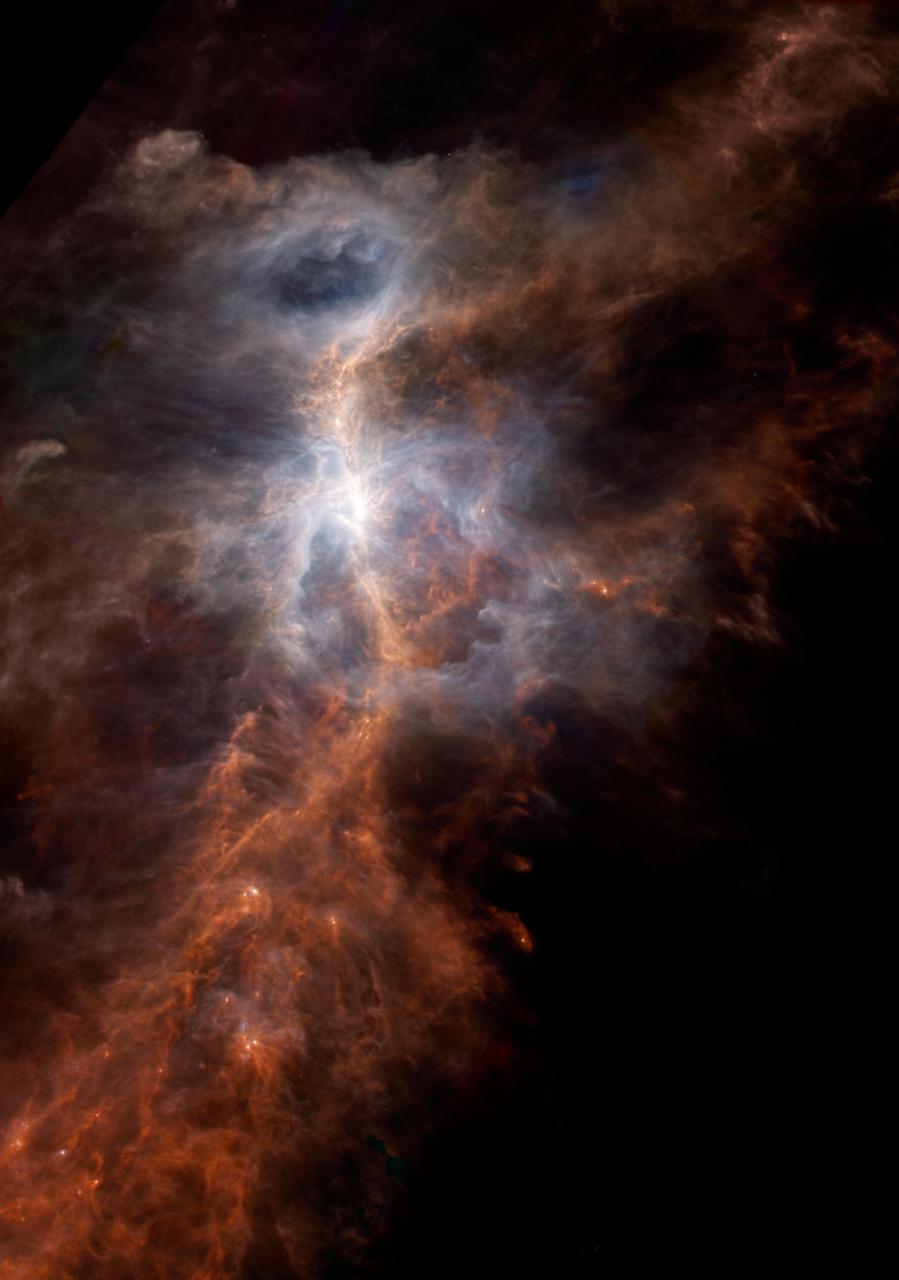
In Today’s Science News, we cover my favourite scientific field: astronomy. It was the first to spark my interest in the sciences and one that I love to this day. Without further ado, let’s begin with the news. Today we will learn about a new giant rock planet the size of Neptune and a discovery that will reshape our understanding of how galaxies evolve.
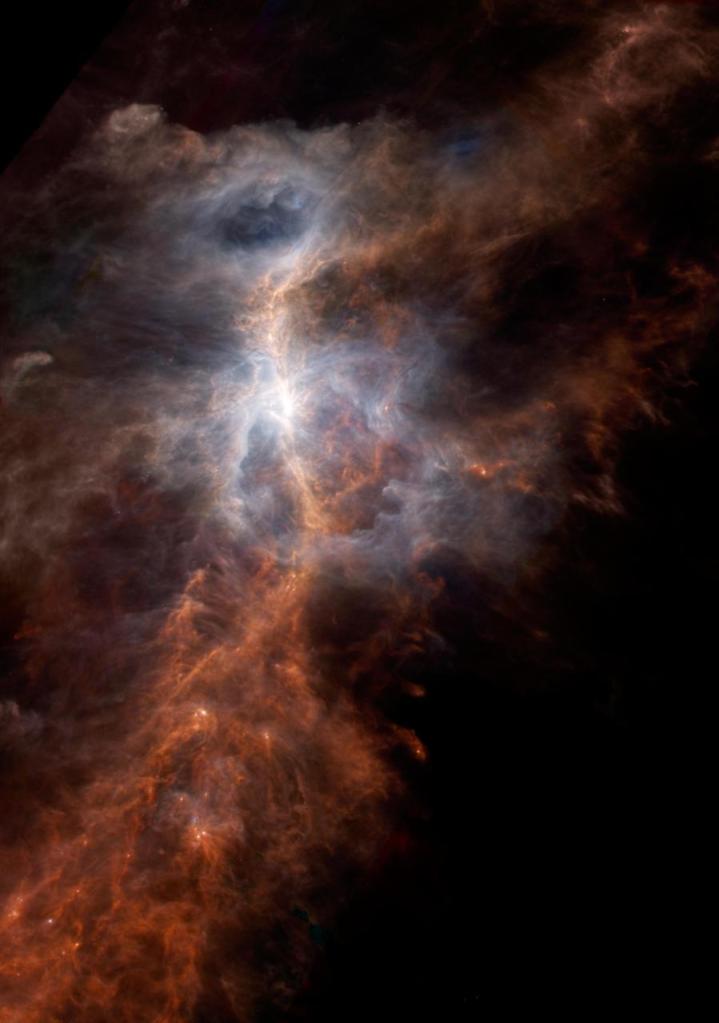
Article 1: New giant planet evidence of possible planetary collisions
SD-Date: August 31, 2023
Et-Date: September 17, 2023
ScienceDaily-Summary: „A Neptune-sized planet denser than steel has been discovered by an international team of astronomers, who believe its composition could be the result of a giant planetary clash.“
Not Open-Access: https://www.nature.com/articles/s41586-023-06499-2
Method of Research
A science team around Luca Naponiello of the University of Rome Tor Vergata and the University of Bristol contributed to the study by modelling giant impacts to figure out how this immensely dense planet may came to be. The researchers used the computational facilities of the Advanced Computing Research Centre, University of Bristol, to perform their simulations. They were funded by the Science and Technology Facilities Council (STFC) and China Scholarship Council.
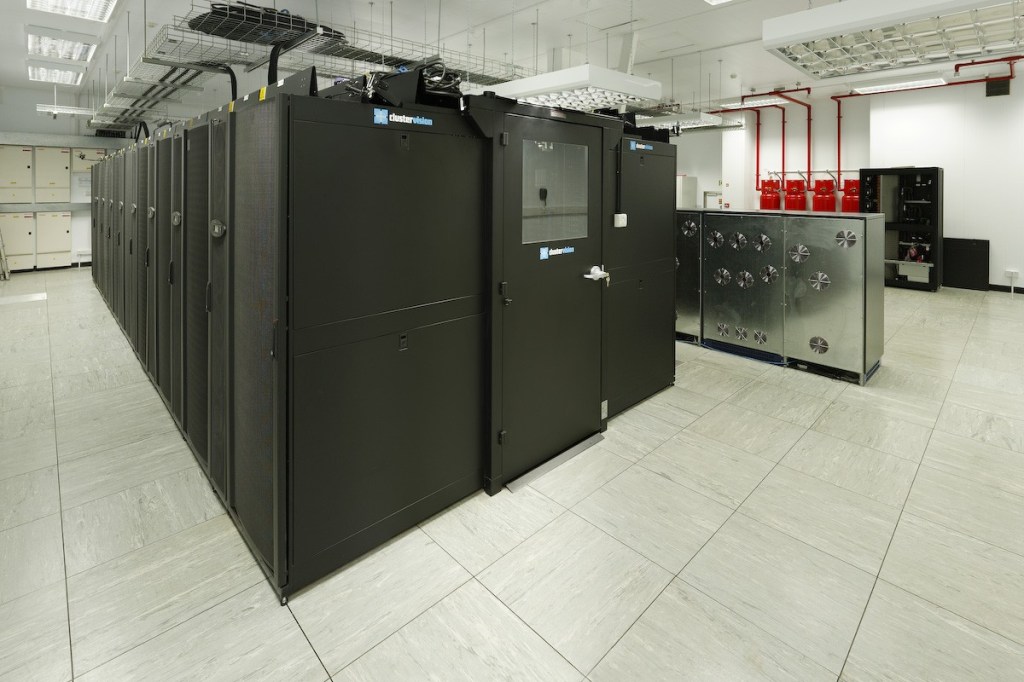
(source: Advanced Computing Research Center)
Findings
As stated above, the researchers created a model to simulate how a Neptun-sized planet could turn out to be this dense. First things first. Let’s get to know Neptune a bit.
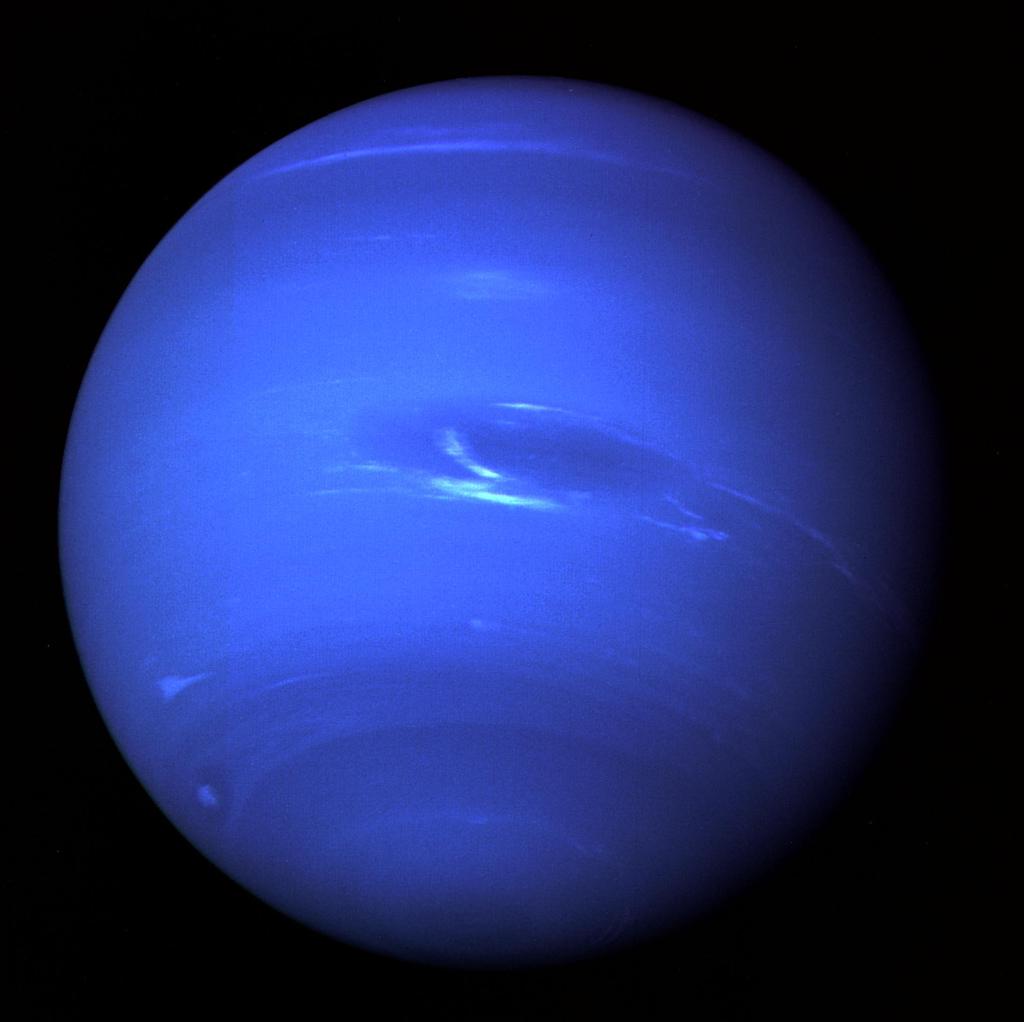
(source: NASA)
Neptune, the eight planet of our solar system, was discovered in 1846 by Johann Galle (June 9, 1812 – July 10, 1910) using predictions of Urbain Le Verrier (March 11, 1811 – September 23, 1877). Thus becoming the first planet located through mathematical calculations.
It is 4,473,929,981 Km (2,779,970,350 miles) away from the sun – more than 30 times the distance between the sun and our planet! Unlike the planet the researchers modelled, Neptune is a gas giant – or rather an ice giant, because most of its mass is a hot, dense fluid of „icy“ materials: water, methane and ammonia. The core is small and rocky.
A Neptunian day lasts much shorter than our days here on Earth, with only 16 hours needed to rotate once. A Neptunian year, on the other hand, lasts 165 Earth years. This means that when it was discovered in 1846 in took until 2011 to get to the same position again. For further information on Neptune, read the NASA Overview. In case you want a more in-depth look, here you can read it.
Finally, what is the density of Neptune? It’s 1.638 g/cm³.
Earth is about three times denser with 5.514 g/cm3, in our solarsystem it is the planet with the highest density. The reason being that Earth is a rocky planet whereas Neptune, a gas planet, consists largely of noble gases.
Now to the finding: in order for TOI-1853b to result in what can now be observed, the initial planetary body „would likely have needed to be water-rich and suffer an extreme giant impact at a speed of greater than 75 km/s“. The planet-planet collisions it experienced during its formation stripped away some of the lighter atmosphere and water „leaving a substantially rock-enriched, high-density planet“.
Its density is higher than steel (7.80-7.83 g/cm³).
While it is an extreme planet, it provides new insights into the formation and evolution of planetary systems as well as new evidence for the prevalence of giant impacts.
Source
https://www.sciencedaily.com/releases/2023/08/230831121723.htm
Article 2: Astronomers find abundance of Milky Way-like Galaxies in early Universe, rewriting cosmic evolution theories
SD-Date: September 22, 2023
Et-Date: September 23, 2023
Science-Daily Summary: „Galaxies from the early Universe are more like our own Milky Way than previously thought, flipping the entire narrative of how scientists think about structure formation in the Universe, according to new research.“
Open-Access: https://iopscience.iop.org/article/10.3847/1538-4357/acec76
Background
For a long time it was thought that disk galaxies, such as ours, were rare in the early universe because they were considered to be too fragile to exist and that their ‚delicate shapes‘ would have been destroyed due to the common occurrence of mergers. Astronomers using the Hubble Space Telescope believed that galaxies had mostly irregular and peculiar structures that resemble mergers. The term used for referring to the structural properties of a galaxy is called ‚morphology‘, it is based on the Hubble classification.
| Galaxy Morphology |
| In 1926, Edwin Hubble proposed a galaxy classification scheme on which nearly all current systems are an outgrowth from. Hubble’s classification is based on the optical appearence of galaxy images on photographic plates, but it only considers the most prominent features: disks, bulges („the dense spheroidal swarm of stars often found in the centres of spiral and S0 galaxies“ – Swinburne University) and bars (temporary structures from gravitational instabilities, they occur in 50% of all disk galaxies). In Hubble’s scheme, they are divided into three general classes: ellipitcals, spirals and irregulars. He further subdivided them into finer groups. However, in order to get a more complete morphological classification, you need to include other features such as stellar halos, warps (in the outer regions of a galaxy), shells (they are ripples of increased brightness which can only be seen on long exposure images) and tidal tails (created through gravitational interactions between galaxies, gas and stars are stripped from the outer regions of the galaxies with one trailing and the other preceding each galaxy). Gérard Henri de Vaucouleurs (25 April 1918 – 7 October 1995) developed a more detailed subdivision of galaxies in 1959 which has since then evolved considerably. The subdivision includes different families, varities and stages. „The de Vaucouleurs system is so detailed that it is more of a descriptive code for galaxies than a commonly used classification scheme.“ (Britannica) |
| Sources I. https://astronomy.swin.edu.au/cosmos/G/Galaxy+Morphology II. https://www.britannica.com/science/galaxy/Types-of-galaxies |
Prior to the discovery, which was achieved thanks to the James Webb Space Telescope (JWST), it was also thought that disk galaxies such as the Milky Way (our home galaxy) formed in in the Universe’s middle age. How the advancement of technology helps us in better understanding our near surroundings (on Earth) and outer surroundings (outside of Earth) can also be seen in astrophysics: Hélène Courtois (born 1970) identified with her team the Laniakea Supercluster (where our galaxy is located in). In 1999, her research into charting our region in space came to a halt because the telescopes weren’t capable of clearly identifying the nature of the Great Attractor. And with it the competition between the different groups from North America, Europe and Australia froze too. Some turned to numerical simulations instead since they couldn’t confirm or disprove their hypothesis.
Courtois also decided to use this forced break to become acquainted with numerical simulation and there she discovered her passion for fractal mathematics. 7 years later, in 2006, telescopes benefited greatly from the progress in technology which took place so she could resume the search for the Great Attractor (Finding Our Place in the Universe (En.), Voyage sur les flots de galaxies – Laniakea, notre nouvelle adresse dans l’Univers (Fr.), Von der Vermessung des Kosmos und der Entdeckung von Laniakea (Ger.), p. 75-76 and p. 82).
Further technological progress also made the JWST possible which resulted in this discovery.
The Finding
The international team of researchers, which included the University of Manchestor and University of Victoria in Canada, discovered that disk galaxies like the Milky Way were ten times more common in the early universe with many galaxies going as far back as
10 billion years or longer when they formed.
The study was published in the Astrophysical Journal.
In a numerical simulation conducted by Marcel Neeleman et al. (May 20, 2020), disk galaxies as large as ours may even have formed through the accretion of cold material and mergers as early as one billion years after the Big Bang. Unfortunately, the study is not open access (you can still read the abstract which I recommend) so you either can purchase it or you can access it through your institution (make good use of it if you can). In case you can’t do either, we are in the same boat.
I’ll have Christopher Conselice, Professor of Extragalactic Astronomy at The University of Manchester, have the last word on the meaning of this discovery: „These JWST results show that disk galaxies like our own Milky Way, are the most common type of galaxy in the Universe. This implies that most stars exist and form within these galaxies which is changing our complete understanding of how galaxy formation occurs. These results also suggest important questions about dark matter in the early Universe which we know very little about. […] Based on our results astronomers must rethink our understanding of the formation of the first galaxies and how galaxy evolution occurred over the past 10 billion years.“
Source
https://www.sciencedaily.com/releases/2023/09/230922110758.htm
Just One More Thing
In June 21, 2017, the Hubble Telescope discovered a massive dead galaxy that also challenged the theories of galaxy evolution. I’ll leave it here too, including the image with the description of NASA.
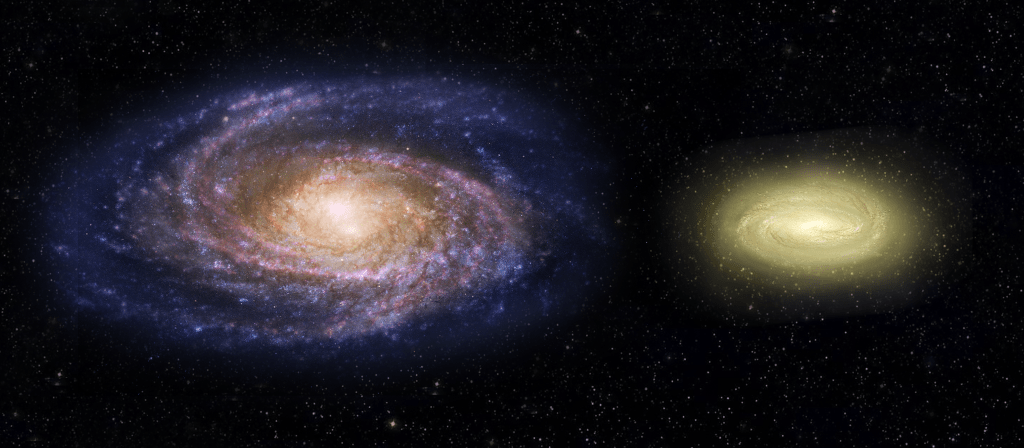
Credits: NASA, ESA, and Z. Levy (STScI)
„Why this galaxy stopped forming stars is still unknown. It may be the result of an active galactic nucleus, where energy is gushing from a supermassive black hole. This energy inhibits star formation by heating the gas or expelling it from the galaxy. Or it may be the result of the cold gas streaming onto the galaxy being rapidly compressed and heated up, preventing it from cooling down into star-forming clouds in the galaxy’s center.“
https://www.nasa.gov/feature/goddard/2017/hubble-captures-massive-dead-disk-galaxy
OSIRIS-REx
Soon I’ll write about the OSIRIS-REx mission. You may already have heard about it, the satellite will return the probes of an asteroid that will help us to better understand the history of our solar system. It was launched in 2016, arrived at the asteroid Bennu in 2018 and took samples in October 2020 after orbiting around it for two years, then it made its trip back and it is going to parachute the probe it collected to the Department of Defense Utah Training Centre around 8:55 am local time (16:55 in Brussels/Germany and 15:55 (3:55 pm) in the UK)*.
I’m very excited and have been for two weeks since I’ve read it in an issue of the Scientific American. While I’ll not be able to watch the NASA livestream (can be found here: https://www.nasa.gov/nasalive), I’m going to closely follow the development.
Thank you and until next time!
*Addendum (24.09.2023, 4:05 pm CEST): Utah is 8 hours behind where I live, so I corrected the time. And in case you are unfamiliar with the US state, you might have heard its name from a dinosaur that was named after it: the Utahraptor (unearthed in 1991).
 Baroque