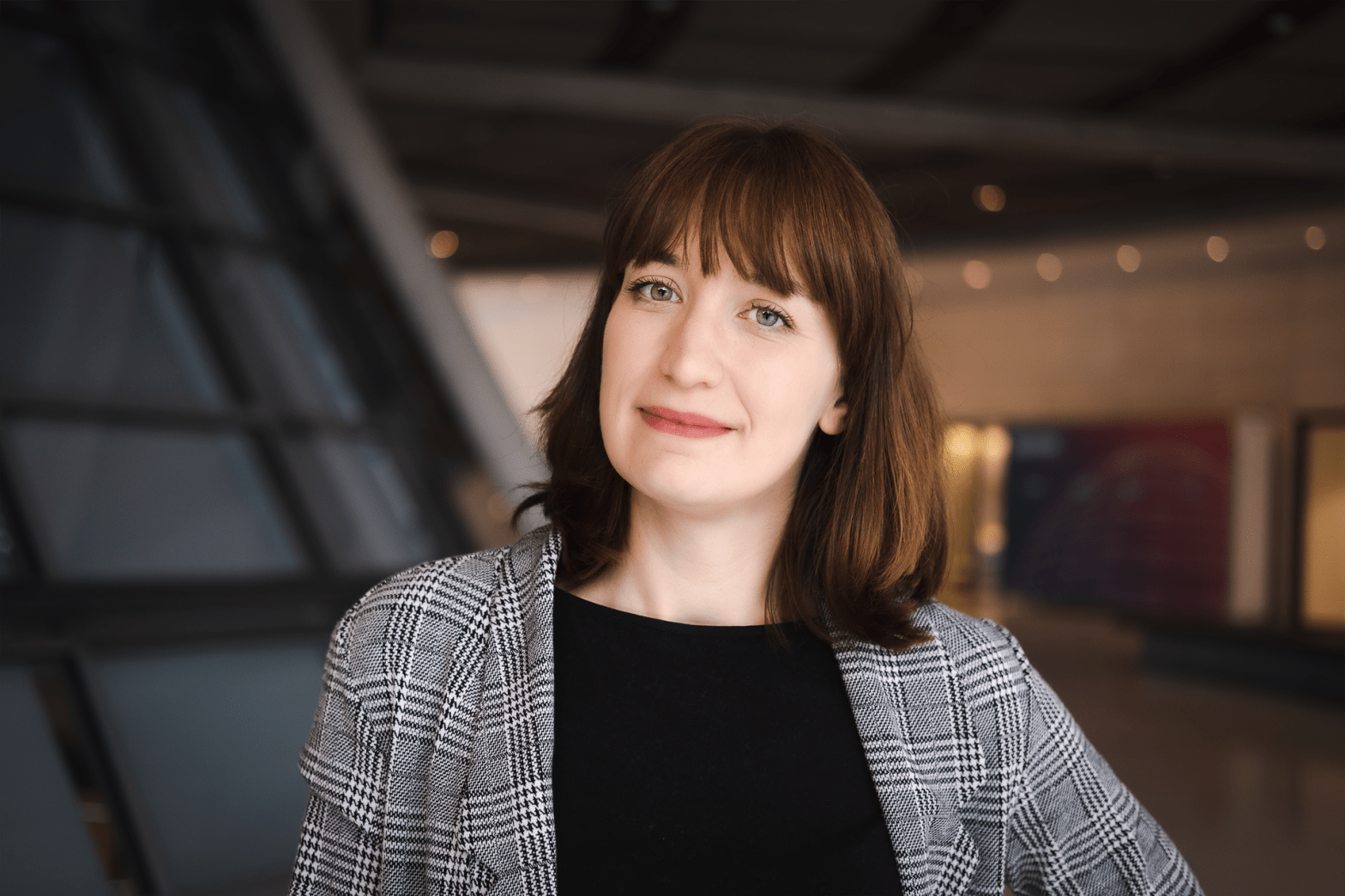
In this entry, I’ll translate an interview of t-online where they talked with Heidi Reichinnek.
She’s the current leader of die Linke faction in the federal parliament and played a crucial role in the rebound of the party in the 2025 federal elections.
The interview was published on September 15, 2025.
Pardon my poor English which may shine through from time to time, I don’t do translations that often.
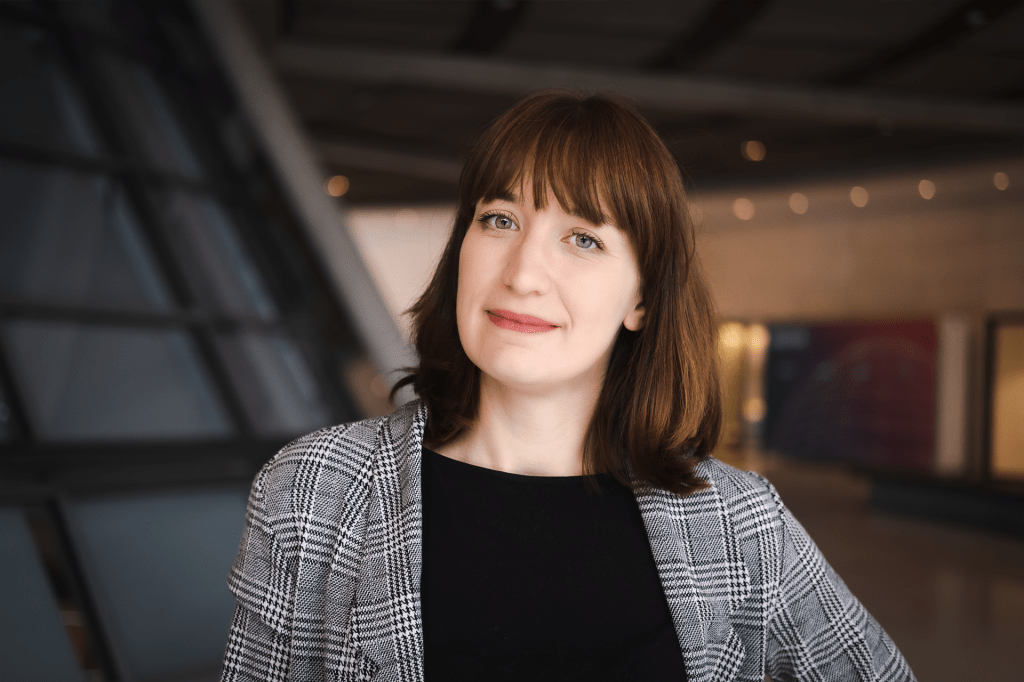
(Image source: Wikipedia)
| Short Biography |
| Reichinnek was born on April 19, 1988 in Meersburg. It’s a small town in Baden-Württemberg that was once the place of residence of the Archbishops of Constance. I split it into the professional and political career. 2007-2011 Course of Studies in Middle Eastern studies and political science (B.A.) 2011-2013 Course of Studies of the politics and the economy of the near and middle east (M.A.) 2013-2015 Research Assistant in the Centrum for Near and Middle East studies, Marburg 2016-2017 Linguistic and Cultural Professional in a „Clearingstelle“ for unaccompanied foreign-born minors Since 2017 Project Coordinator of a model project for democratization and radicalization prevention (-> webarchiv) September 2015 Joined die Linke in Osnabrück 2017-2019 Spokesperson of the the Linksjugend of Lower Saxony November 2016-2021 Representative of die Linke in city council of Osnabrück 2021 Elected into the Bundestag through the party list of Lower Saxony. She was responsible for child, youth and women policies. As spokesperson of the latter she was part of the chair of the die Linke faction in the parliament. 2024 Elected as chairwoman of die Linke in the federal parliament and, next to Jan Van Akten, nominated as a co-frontrunner for the Federal Election 2025. 2025-Presence Acting chairwoman of die Linke faction in the Bundestag along with Sören Pellmann. (-> Bundestag) |
Translation of the Interview
The questions and statements of the interviewer (t-online) were kept in the bold font.
The responses of Reichinnek in the usual font.
Heidi Reichninnek is the new face of die Linke. t-online talked with her about the usage of social media as a political tool, Jens Spahn and precarious questions of power which lie ahead for die Linke in the federal parliament.
[…]
t-online: Ms. Reichinnek, are you Germany’s first political influencer?
Heidi Reichinnek: No. Many politicians are active on social media. And that’s a good thing. Then that’s the place where exchange happens with our constituents. Just as from door-to-door visits and info booths. However, I do not consider myself an influencer, rather I seek to shed light on problems and propose solutions that my party offers.
You have nearly 800,000 followers on Instagram. Would you have been just as successful without social media?
I hope so. One needs substance too that you can distribute, otherwise it is pointless.
And that’s what my party and I have. You have to have sound plans and place special emphasis on them. It’s especially important for politics.
How authentic is the Heidi Reichinnek on Instagram?
How authentic? 100 Per cent. I’m not a good actor, and it would be too exhausting anyway.
The people notice when you are not your true self. I also come from the child and youth services, I make policies for children and the youth, so one thing was clear from the beginning: I had to be active on social media.
On Instagram you compete with the Bavarian Minister President Markus Söder. He’s just barely 20,000 followers beneath you – even with videos about food …
So, many people like to present themselves. It’s more about how you present yourself.
In my videos I’ll always try to show: Where is the problem? That’s our solution to it.
Topics such as child poverty, the health of women, pension. Naturally, social media is also about having fun. You can also participate in trends once in a while. But at the core of it all should be our political message. And not who eats what at the moment.
You mentioned pension. Your party boldly demands: Abolish billionaires. Isn’t the welfare state too serious of a topic for such populism?
It’s about the question of distribution in the social fail-safe system. That’s where massive inequality exists. Regarding the pension system, for instance, we have to ensure that everyone who is employed pays into it and double the social security contribution assessment ceiling to secure the pensions. It’s unacceptable that the nurse has to pay dues on her entire income whereas the high-paid manager does not.
When you have concrete solutions, why demand populistic nonsense such as abolishing billionaires?
In public debates, the question often revolves around which social security benefits can no longer be afforded and never about a just burden sharing – that’s populistic nonsense.
And that’s where we step in and say: essentially, it is about us here at the bottom against those on the top. Three-quarters of the multi-billion euro fortunes in Germany are hereditary. It’s not even remotely merit-based. What we want is that billionaires contribute adequately to the financing of society. And, of course, for that you need to take a clear position and have a clear demand to start a debate in the first place.
So, you are not actually serious about abolishing billionaires?
We are. Nobody becomes a billionaire through their own labour, it’s always through the labour of others – way too often by keeping wages low or increasing rents. This money was hard-earned by others. For us it is important that there are good working conditions for everyone, fair wages, adequate supply for the people, a system of pension that doesn’t lead into poverty, an actual basic income support for children, investments into education, healthcare, environmental protection. Hence you have to come forward with the question of distribution and get into the debate with your demands more extensively and show everyone: it’s possible to do it another way. Of course, you need the support of the majority of society for that and that’s what we are fighting for. The majority already is in favour of the introduction of a wealth tax – even 2/3rds among CDU/CSU members.
The advantage of being in the opposition is, that you can make populistic demands without having to implement them.
You know, I’d rather implement what we demand.
We have already proven that we can do that. Take Berlin, for example, where we implemented free lunch for everyone up to the 6th grade.
Red-Red-Green (SPD-die Linke-Grüne) introduced it, but now it is in jeopardy of being overturned (Black-Red government consisting of CDU and SPD). On the state-level you can achieve a lot, but on the federal level naturally a lot more.
You also demanded that Chinese UN-soldiers should secure the border to Russia in Ukraine. Just recently, the head of Moscow Vladimir Putin and and the Chinese president Xi Jinping met in Beijing to demonstrate their fellowship. Does that count as populism or denying of reality?
That’s exactly why we have made that demand.
Partners, that are closely connected, do not shoot at each other. For that to happen, we need first and foremost a ceasefire. Regarding the support of Ukraine, it’s also about the question how we help Ukrainian refugees who fled to Germany. I consider it highly problematical that refugees, who came to Germany since April, no longer receive Bürgergeld.
That’s something that happens within Germany. It doesn’t help the Ukrainians to defend their country.
Putin won’t negotiate on a voluntary basis, we are aware of that. We are not gullible.
That’s why we demand that the oligarchs surrounding Putin are hit intelligently with sanctions. It would put him under pressure, but that’s not what is happening.
We also want that asylum is offered to Russian defectors, just like the former chancellor Olaf Scholz promised it back then.
Isn’t it naive to oppose Nato and conscription, when Putin has just shown in Poland with his drones that he wants to challenge Nato?
Isn’t it more naive to assume that conscription would deter Putin? We are strictly against forcing people to do military service who do not want to do that. Nobody should be coerced. Still, there should be good opportunities to voluntary serve in the military, and that includes the good equipment and good working conditions. And yes, the Bundeswehr should of course be able to defend our country, but this arms race will not make our world any safer or more peaceful.
Let’s talk about the election of the constitutional judges. This requires a 2/3rd majority in the parliament, therefore also the votes of die Linke. How did you learn about the new SPD-candidate, the lawyer Sigrid Emmenegger, for the constitutional court?
It’s quite irritating to me that a name has already been leaked, as not all the necessary conversations have taken place and not all questions been answered yet. The only advice I can give to the CDU/CSU (aka Union) is to not mess up this election too. However, this Monday we will talk about it in our caucus on how to approach it.
You haven’t told us yet how you learned about it.
We were in exchange with the SPD. However, to the participants of our faction the name was revealed at such a short notice that they couldn’t inform their other faction members before the press already wrote about it.
Emmenegger as the candidate is one thing. Günther Spinner, the candidate of the Union, must be more challenging to your faction. Before the recess of the parliament, your faction signaled their willingness to vote in favour of him to prevent a majority with the AfD. Now it has been put up for renegotiation. The head of die Linke, Jan Van Anken, made it clear during the Summer: if the CDU/CSU doesn’t approach die Linke, they can’t count on the faction of die Linke. If so, Spinner would be voted in with the help of the AfD. Are you really going to pull through with it?
We do no horse-trading. It’d only be fair that we get the same right of nomination as the FDP had. It is the task of the CDU/CSU to get a democratic majority for their candidate.
And the AfD definitely does not number among them. It’s now their turn.
The faction leader of the Union in the parliament, Jens Spahn, recently said that he wants to see more support from the center-left parties against the AfD. That’s a very distorted perception. However, then I would also expect from the Union to approach our faction, to prevent a majority with the AfD. It wouldn’t hurt either to clearly state that they won’t nominate any judge with the help of the AfD.
And if the Union does not move on the issue, you’ll drop their candidate?
That’s a decision we will make in our faction. There’s still a bit of time left until the election to the constitutional court.
Are you aware of the fact that it could lead to the break-up of the black-red coalition, if the candidate Spinner doesn’t get elected?
Then the Union should be even more inclined to reach an agreement with us. I’m not responsible for keeping this coalition together. In all honesty: Who is it here that provocates? We have always emphasized: we are ready to talk to all democrats to implement policies to improve the lives of the people in our country and to protect our democracy. It won’t fail because of us. It is the task of the governing coalition to find the democratic majorities for all of their canddiates. And the coalition and Jens Spahn have the task to do exactly that.
Isn’t it also about a civic responsibility?
That’s on the Union, correct. From the very beginning, we signaled our readiness to talk.
Just a few months ago your party was okay with supporting Spinner. If you withdraw your support now, isn’t that purely power politics?
There was no final decision on how we, in our faction, deal with the candidacy of Spinner.
And there’s still none. To repeat myself: to accuse us now, for insisting on the normal democratic way to be involved in the democratic decision-making, merely distracts from the failure of the Union. That’s coming from an Union who seeks majorities with the AfD and carried it to the extreme by participating in the hate-campaign against Frauke Borius-Gersdorf. With an Union that doesn’t do anything else besides painting AfD-policies black [the party colour of the CDU/CSU], is an Union I do not want to collaborate with. What I expect is that the Union clearly keeps a distance to the AfD and ensures there a democratic majorities.
But it is this role of the majority provider that is the task of your party.
Tell that the Union. There’s a democratic majority, but you have to use it.
We are not responsible for ironing out the mistakes of the Union.
We do not intend to make any power games out of it.
Do you really believe that the Union is going to revoke the Incompatibility Resolution with die Linke?
The Union must make it clear what this is actually about. It’s their decision which path they’ll take: do they work towards a minority government with the AfD or do they intend to collaborate with all democratic-minded parties – even on topics that are uncomfortable.
In Thuringia and Saxony, the Union is already working with us, but in the Bundestag they want to treat us like the AfD and pretend as if they couldn’t talk to us. That’s hypocritical.
You also demand that die Linke gets a seat in the parliamentarian control committee. Do you think, you will get one during this legislation? You failed in June when the Union refused to support you.
Over the coming days we will decide who we nominate for the committees. There were several committees die Linke didn’t get in, such as the Federal Debt System [Bundesschuldenwesen]. We clearly state: we deserve a seat in these committees.
In the previous legislations our faction was represented in said committees, naturally we expect to have representation in the parliamentarian control committee too.
Are you optimistic about it?
I’m curious about the future developments.
Are you personally affected by it, that the Union doesn’t treat you as an equal?
I do not need the discussions with the Union on eye level for my own inner peace.
For us it is important that we protect our democracy and achieve as much as possible, that the situation for the people in our country finally improves again.
Next year, the state legislature elections take place in Saxony-Anhalt. In the most recent survey, die Linke hovered around 13% whereas the AfD reached 39%. If the election plays out that way, there’s no way around stable majority options without the AfD.
Do you think there’s still time for the tides to turn?
It’s our goal to get stronger and make the AfD as weak as possible. We still have one year left to fight and convince the people.
You birthyear is 1988. You didn’t actively experience the GDR (German Democratic Republic), but you did experience the years after the reunification in Saxony-Anhalt. How did they influence you?
On the one hand, I do know what it is like to lose one’s job and what it means to have a broken employment biography. On the other hand, the entire provision of public services, which existed in the GDR without a doubt, completely fell apart after the reunification.
This loss led to massive frustration and anxieties. There was never a real growing together [between East and West Germans]. The East was the defeated one and the people were made felt that they are the losers. That’s why right-wing extremists have easy game in the East. We finally have to show the people that we will no longer neglect them. And that the AfD provides no answers to their problems.
And whose the biggest competitor in said election: the Grünen or the AfD?
The AfD is not a competitor, she’s the political opponent. And, unfortunately, the Grünen are no competition at all right now in the elections in the East. To me personally, it is important that we can broadly convey our ideas and approach to solutions.
Another personal question: how often do you receive death threats?
Just this week I received such a mail. I’m unaware of most of the things, because they occur online: sexist insults and deaths threats, threatening sexual violence. That’s massive.
That’s not just me, but likely all women who are politically active. It’s especially tragic on the local level where the people do it on a voluntary basis. That’s a worrying development.
Do you always report the insults and threats to the police?
Yes, whenever that is possible. Of course, it can’t be done en mass, a lot of it is done anonymously, but it is still important and my team supports me on that. The internet is not an extralegal space. These are not trivial offenses, rather they provide fertile soil for that actually happens. That’s what the people have to be made aware of.
Does it still affect you?
Oftentimes it does not anymore. Sometimes I do ask myself: What kind of people are they, that they write such things on the internet? Would these people also tell me that to the face? What would change, if we could talk face-to-face? That’s what on my mind for the most time.
Ms. Reichinnek, thank you for this interview!
Original Text:
Linken-Politikerin Reichinnek
„Eine sehr verzerrte Wahrnehmung der Realität“
https://www.t-online.de/nachrichten/deutschland/innenpolitik/id_100910242/linken-politikerin-reichinnek-lenkt-nur-vom-versagen-der-union-ab-.html
(Image source: Wikipedia)
Reasons for the Translation
I’m fed up with the overrepresentation of the far right in the media landscape. These rapscallions who aim to destroy our democracies, and currently do so actively in the US with the Trump Administration whose leader is an insurrectionist himself, and undermine our democratic system once again from the within. Next to the climate crisis the biggest crisis of our lifetime, and depending on what we do or not do for future generations too.
Consequently, I translated this interview so those who don’t know her yet can learn more about her. I’ll likely do more translation like these in the near future, for instance from the Grünen of which I’m a party member of. While on the issue of foreign policy we likely differ more greatly, when it comes to the domestic policies there’s a lot more common ground.
The global far right is interconnected and have a common goal, it is only logical that the global democratic movements and political parties do the same to permanently exile these hostile forces into the history books.
About the Far-Right AfD in Germany
In the interview, the AfD has been mentioned quite a lot too. So, here’s a quote from my article from the beginning of this year „A Letter from Germany to Elon Musk: Get Lost and Shut up!“ (published January 5) where I elaborate – in this letter that directly addresses Musk, even though it is virtually certain he won’t read it – why the AfD is such a threat:
„Let’s move on to Germany, my country, now that I reminded everyone about your awful track record. Apparently, you are a big fan of far-right political parties. In Saxony-Anhalt, Thuringia and Saxony, the local branches of the AfD are already confirmed right-wing extremist (and thus anti-constitutional) movements and in Brandenburg, Lower Saxony, Bremen, Hessen, Baden-Württemberg and Bavaria they are a right-wing extremist suspected case. In Germany we’ve got something called a Federal Office for the Protection of the Constitution, you know, as a lesson from the early 20th century when a far-right antisemitic party exploited the young Weimar democracy in times of crisis to destroy the democratic system from within and later on started the Second World War in Europe.
Furthermore, our constitution allows for anti-democratic parties that actively seek to abolish our democratic system to be banned. And a ban of the AfD has already been proposed in our federal parliament with over 100 signatures – one can only hope it succeeds, so our constitutional court can finally do its work. Recent developments strengthened this very institution of our modern democracy, agreed upon by the democratic parties (CDU/CSU, FDP, die Linke, SPD and die Grünen – 600 votes in favour).
Anyway, you do realize that the AfD seeks to deport millions of Germans with immigration background? You know, an issue you’ve got in a heated discourse with Trump’s MAGA base?
This mass deportation plan discussed at a conference in Potsdam, which would violate our constitution, was already adopted as a policy by the Bavarian AfD in 2024.“
Unfortunately, the proposed AfD ban didn’t pass. Certainly one of the greatest mistakes of Germany’s Post-WW2 history. With the US government now supporting the far-right in Europe, I do sincerely hope that Germany will be able to withstand the attempts of Russia and the US to destabilize our democracy. The AfD is nothing more than the spiritual successor of the NSDAP, and evidently the puppet of Russia and Trump’s lapdog.
 Baroque