
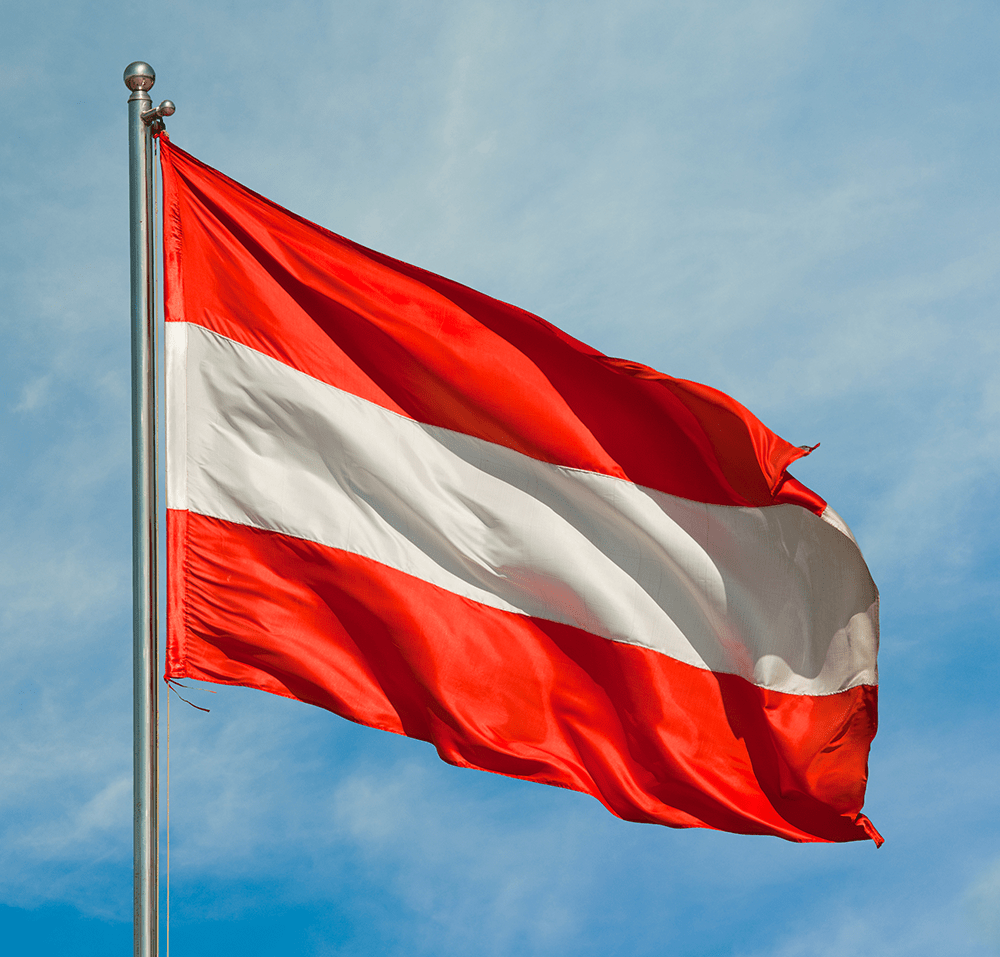
In 1999, it first looked like the coalition between the ÖVP (Austrian conservatives) and SPÖ (Austrian social democrats) would continue as usual. The election resulted in SPÖ becoming the strongest political force, the FPÖ and ÖVP the second strongest force and the Greens – way behind – the third strongest force. It’d end quite differently…
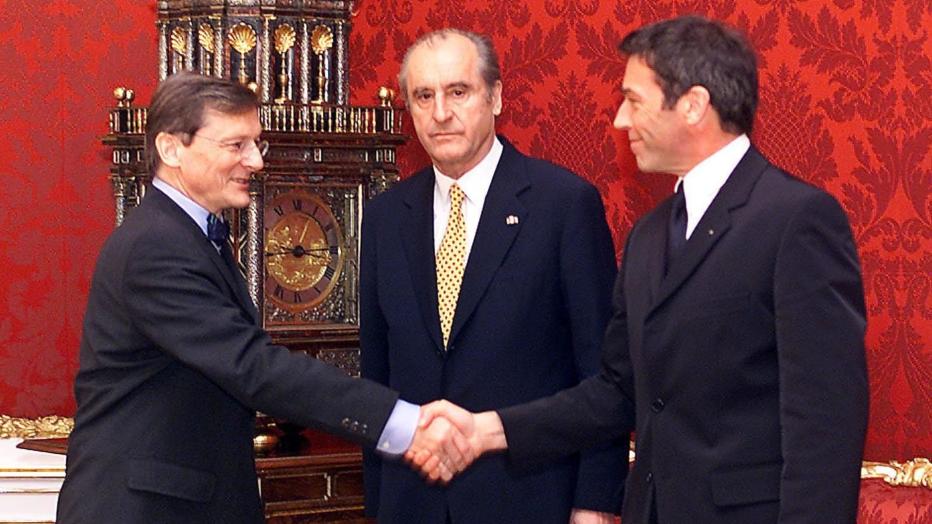
(source: Kurier)
Background Information
Before we move on to the translation of the timeline, here’s first some information about the ÖVP and FPÖ. Due to the nature of the FPÖ, their background information will be more intensively covered.
| ÖVP (Österreichische Volkspartei = The People’s Party of Austria) Ideology: Conservatism Founded: 1945 |
| The ÖVP is one of the most important political parties in Austria and is therefore strongly present in the political landscape. The party has 51 mandates in the Austrian National Assembly (out of 183 seats), 22 mandates in the Federal Assembly of Austria (out of 60 seats) and 149 seats in all Landtags (parliament of the federal states). Overall, there 600,000 party members and the party receives €78,000,000 in grants from the state (or $90,670,730.31 | Exchange Rate: 1 EUR = 1.16245 US, November 15, 2025). In the European Parliament, the party is present with 5 seats. The current Bundesparteiobmann (federal chairman) is Christian Stocker (1960-Present). |
| Source https://blogfacts.de/fakten-oevp/ |
| FPÖ (Freiheitliche Partei Österreichs = Freedom Party of Austria) Ideology: Right-Wing Extremism/National Conservatism Founded: 1956 |
| The party was founded by former National Socialists for former National Socialists. As „Schwerbelastete“ (historically burdened for their role during the Third Reich) they were not allowed to vote in the elections of 1945, 1949 and 1953. After receiving the right to vote, the Electoral Party of Independents formed into the Freedom Party of Austria. I’ll briefly talk about the three phases of the FPÖ: the beginning (1956-1978) when the FPÖ was a far-right fringe party, the short phase when the party tried to emancipate itself from its far-right roots (1978-1993) and the return (1993-Present). The Beginning (1956-1978) The first Bundesobmann (federal chairman) of the FPÖ was Anton Reinthaller (1895-1958) who was part of the Anschluss-Cabinet of Seyß-Inquart (1892-1946) in March 1938 which bestow the coat of legitimacy for the annexation of Austria to the Third Reich. In the following years, he was the undersecretary of Hitler’s cabinet and received the honorary rang of an SS-General. His successor, Friedrich Peter (1921-2005), ruled the party from 1958 to 1978. During the war, Friedrich was member of a SS-unit as an army officer that actively participated in war crimes. So, the party was a melting pot for those Austrians who either still identified with National Socialism or who didn’t want to distance themselves from Nazism. Consequently, they were always on the side of right wing extremists who would later be put on trial in front of Austrian courts for potentially being involved in mass murder during World War 2 or when a college professor downplayed Nazism (Taras Borodajkewycz, 1965). In elections, the party usually remained below 6% of the votes (1956: 6.52%, 1959: 7.70%, 1962: 7.04%; 1966: 5.35%; 1970: 5.52%; 1971: 5.45%; 1975: 5.41%; 1979: 6.06%; 1983: 4.98% – Wikipedia). Emancipation Attempt (1978-1993) In 1978, the FPÖ was accepted into the Liberal International (worldwide organisation of liberal parties) and tried to emphasize their change through a generational change at the top: age-wise, the Bundesobmann – Norbert Stegner (1944-Present) – had no longer any personal connections to the NSDAP. However, even in this phase the FPÖ refused to reflect on and deal with their past. In 1983, the party succeeded in breaking their parliamentarian isolation by going into a coalition with the social democratic SPÖ. The strategy would soon change again under Obmann Jörg Heider (1950-2008) when they noticed that their redefinition of the FPÖ didn’t lead to significant electoral gains. Instead of aiming for acceptance by the system, they now banked on the opposition to the system. Under Heider, the FPÖ would turn into the „prototype“ of what would soon be called „right-wing populism“ in Europe (citation from bpb). The party often used xenophobic rhetoric and didn’t shy away from trivializing Nazism. It was a strategy of right-wing extremist ambiguities (as it is now regularly used by the far-right) while posing as anti-elitism. This very strategy also led to the Liberal International to threaten them with expulsion, but the FPÖ forestalled it by leaving it in 1993. Simultaneously, the FPÖ went from a fringe party to a medium-sized in the process. The Return (1993-Present) In the short „liberal“ phase of the FPÖ under Steger, the party tried avoiding to be publicly seen with right-wing extremist activists. Under Heider, the party moved away from the German National line and focused instead on provocation (always with an eye on the media landscape) to emit right-wing extremist signals. They participated in events dominated by SS-Traditional Associations such as the memorial to the fallen soldiers at the Ulrichsberg in Kärnten. Unfortunately, the FPÖ wasn’t alone with it as there were a few signals from both the SPÖ and ÖVP who didn’t want to miss out on this pool of potential voters of the „former“ either. Instead of just the traditional extremist positions, the party focused on issues they could instrumentalize against the „political class“ and „old parties“ – namely the SPÖ and ÖVP. Using existing xenophobic resentments became part of their armoury and it made the FPÖ – before Austria joined the European Union in 1994 – the crucial voice against any opening of Austria’s borders. The shift from right-wing extremist to right-wing populist didn’t save the party from international isolation and when the ÖVP and FPÖ went into a coalition in 2000 it resulted in a bilateral diplomatic boycott of all EU-member states. The ambiguity of the FPÖ towards post-Nazi apologia and anti-European rhetoric didn’t change the party’s position as an outsider. For other European democracies she remained a political party outside of the accepted „mainstream“ in the democratic party landscape (at least until the 2020s and the Second Trump Administration). The current federal chairman of the FPÖ, Herbert Kickl (1968-Present), even went so far as to reclaiming the „Volkskanzler“ (the People’s Chancellor) – a term used by the National Socialists to describe Adolf Hitler. In 2017, when he was the Minister of the Interior under Sebastian Kurz (1986-Present), Kickl led the Federal Office for the Protection of the Constitution of Austria be stormed by armed police officers who confiscated an untold amount of data, even from ongoing official investigations against right-wing extremists (Der Spiegel, September 16, 2023 | So lief der »Überfall« auf Österreichs Verfassungsschutz) Currently, the FPÖ has 57 mandates in the Austrian National Assembly and 16 Mandates in the Federal Assembly of Austria. |
| Source https://www.bpb.de/themen/parteien/rechtspopulismus/239915/fpoe-von-der-alt-nazi-partei-zum-prototyp-des-europaeischen-rechtspopulismus/ |
Timeline
With the information in mind, let’s return to the major part of the article: the translation of the timeline from „museum in progress“: Chronologie eines Machtwechsels (= The Chronology of a Change of Government). October 3, 1999 – February 2, 2001.
Since I’m German, and the original author Austrian, the dates depicted in the timeline follow the following structure: DD-MM (03.10. = 3rd October).
Original Timeline: https://www.mip.at/texte/237/
Author: Gerfried Sperl (born 1941 in Oberzeiring, Steiermark)
1999
October
03-10.: The ÖVP falls behind the FPÖ on the third place in the election to the National Assembly by a paper-thin margin, yet still has hopes for the postal votes. The hopes remain unfulfilled. Despite heavy losses, the SPÖ remains the strongest party. The Grünen gain strongly. The Liberals fall out by 0.3%.
12-10.: After the election results are made official – the ÖVP is 415 votes behind the FPÖ -, the ÖVP makes the decision to go into the opposition. The final result of the election:
SPÖ: 33.2% and 65 mandates; FPÖ: 26.9% and 52 mandates; ÖVP: 26.9% and 52 mandates; Grüne: 7.4% and 14 mandates; LIF: 3.7% and 0 mandates.
14-10.: Thomas Klestil (1932-2004) assigns the SPÖ-Chairman Viktor Klima (1947-Present) „with exploratory negotiations over factual topics for a potential prospective government program“ – with all three parliamentarian parties.
15-10.: One-to-One conversation between Klima and Schüssel (-> Wolfang Schüssel, born 1945) at the EU-Summit in Tampere, Finland (15-16 October: https://www.europarl.europa.eu/summits/tam_en.htm).
27-10.: Exploratory negotiations of the SPÖ with the ÖVP, FPÖ and Grünen. At the same time, the ÖVP has „prospective talks“ with the FPÖ.
28-10.: First One-to-One conversation between Heider and Schüssel. Heider present with Klestil.
November
14-11.: After the TV-Press Hour, Viktor Klima said that he expects a minority government to form.
24-11.: Klestil demands from the ÖVP a decision over the participation in the next government.
29-11.: Minister of Finance Rudolf Edlinger (SPÖ | 1940-2021) announced during a budget forward projection, that he wants to save €20 billion.
December
05-12.: ÖVP-Chairman Wolfgang Schüssel announced in the „Press Hour“ that the ÖVP won’t exclude a participation in the next government.
06-12.: Klima presents a summary of the talks to Klestil regarding the exploratory negotiations.
09-12.: Klestil assigns Klima the task to „ensure the formation of a government with a solid and clear majority for the wellbeing of the country“ in the parliament.
13-12.: The pary executive of the ÖVP decides to start government negotiations. Schüssel: The ÖVP will first negotiate with the SPÖ.
17-12.: First round of the government negotiatons: SPÖ and ÖVP agree on „absolute confidentiality“ and formulate as a goal „to have clarity over a possible government formation until mid-January“. Klestil expects „intensive, quick and constructive negotiations in several working groups, in order to have a concrete interim result by December 30, 1999“.
22-12.: Second negotiation round between SPÖ-VPÖ.
26-12.: The acting ÖVP-Klubobmann Andreas Kohl (1941-Present) says: Should the negotiations with the SPÖ fail, a Blue-Black government may be the most likely result.
28-12.: Third negotiation round: there’s no recognizable tendency yet whether SPÖ and ÖVP will go into a coalition. Styrian ÖVP-Economic Councellor Herbert Paierl (1952-Present): „In case of a new edition of the old coalition, we will drive right into hell.“
(Styrian = Steiermark, federal state in Austria)
29-12.: An interim report about the government negotiations is given to Klestil by Klima and Schüssel.
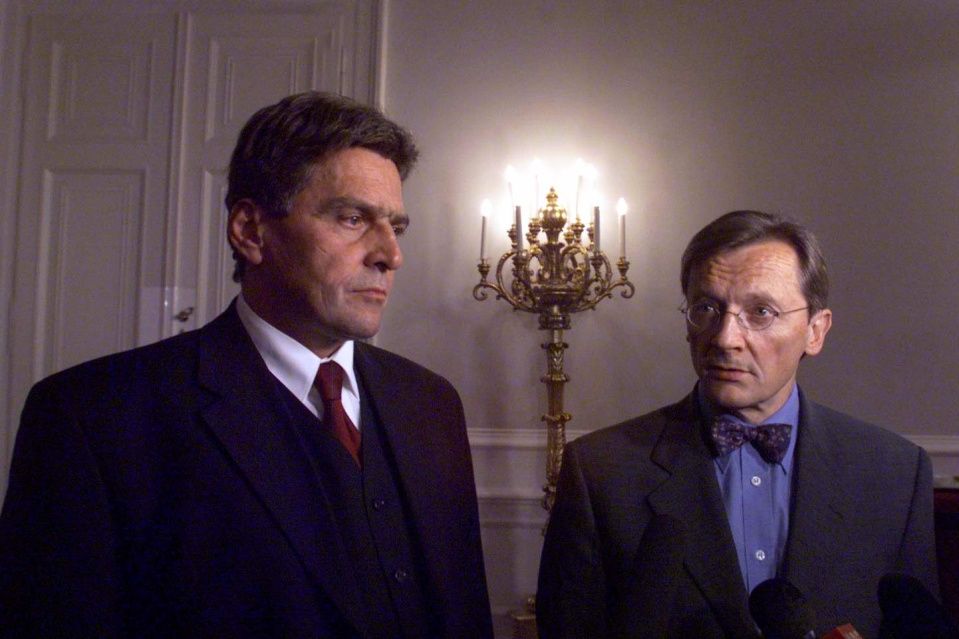
(Source: Der Standard)
2000
January
01-01.: The New Year’s Speech of Klestil and Klima are characterized by the urgency to quickly form a new government.
05-01.: Fourth negotiation round between SPÖ and ÖVP. Skepticals voices about the continuation of the old red-black government come from the Styrian and Burgenland ÖVP.
09-01.: Medial uproar over a blue-black (FPÖ-ÖVP) „secret pact“ for the next 8 years. Both parties deny it. The Styrian ÖVP in particular vocally opposes a new red-black government.
Secret meetings of ÖVP-grandees during the night on the Tulbingerkogel near Vienna.
(The Tulbingerkogel is a village of the market town Tulbing, 8 km away from the city borders of Vienna)
10-01.: Fifth negotiation round between SPÖ and ÖVP: Before the talks begin, Edlinger considers to increase the entry age of early pensioneers by 2 years. Opposing wind to this consideration comes from the SPÖ and trade unions.
11-01.: Klima isn’t willing to be part of „any random government“, he doesn’t want to be the „Pausernkasperl“ (~ Interim Fool).
12-01.: Sixth negotiation round between the SPÖ and ÖVP.
13-0.1: The negotiations take a dramatic turn: Klestil warns both parties about a failure of the negotiations and the danger of a new election. The mayor of Vienna and negotiator for the SPÖ Michael Häupl (1949-Present) loses his patience: If no agreement can be reached by the start of the next week, he will leave the negotiation group. The Minister of the Interior, Karl Schlögl (SPÖ | 1955-Present), expresses himself similarly.
14-01.: The seventh negotiation round brought forward „substantial progress“, according to both parties. Head of the FPÖ, Jörd Heider (1950-2008), criticizes Klestil: The president mustn’t restrict the formation of a majority coalition to red and black. He, Heider, is confident to present a „perfect government program with interesting personalities“ within a week.
15-01.: The SPÖ-ÖVP negotiations – for the budget, among others – continue in smaller groups. Meanwhile, the FPÖ presents an alternative government program.
16-01.: The eighth negotiation round: The negotiators of the ÖVP report again to the heads of the federal state parties and associations in the Europahaus in Vienna. Schüssel receives the pouvoir (= power to act) to conclude the negotiations.
17-01.: The ninth negotiation round turns into a 13-hour long marathon negotiation round.
Contentwise there’s largely an agreement, but there’s none about the distribution of departments yet. The negotiations are adjourned once again.
18-01.: The One-to-One talks between Klima and Schüssel about the departments led to no agreement. Regarding the content, the SPÖ-headquarters (unanimous) and ÖVP-board (the majority) accept it – despite the heavy protests of the parties basis and the trade unions over the duration of the day.
19-01.: Further One-to-One talks between Klima and Schüssel don’t advance the ministerial question. The SPÖ-board accepts the package with 32:13 votes.
20-01.: The ÖVP demands definitive: They want the Ministery of Finance, otherwise the scrutiny of the budget could not be guaranteed. Moreover, all SPÖ-negotiators – including the trade unionist Rudolf Nürnberger (1945-Present) have to sign the coalition agreement and guarantee its implementation. Within the SPÖ it is seen as unreasonable demands. Schüssel’s last attempt to save the negotiations, by proposing an independent Minister of Finance, remained unsuccessfull.
20/21-01.: At night-time, at 3:17 am, Klima announces the end of government negotiations.
21-01.: Federal President Thomas Klestil renews the task to form a new government and assigns it to SPÖ-Chairman and Federal Chancellor Viktor Klima, which includes a minority government – however, that only becomes clear after some disarray.
24-01.: ÖVP-Obmann Wolfgang Schüssel announces negotiations with the FPÖ. The FPÖ-headquarters votes unanimously for government negotiations with the ÖVP.
25-0.1: The government negotiations between the FPÖ and ÖVP begin while the SPÖ states that they are still fighting for a minority government. In the evening, after a meeting with the heads of the party, Klima concedes publicly that he has failed with a formation of a minority government.
26-01.: For the first time, the National Assembly was in session under a new omen. Officially, the old red-black coalition pact still applies. Yet, the session is characterized by mutual accusations between the SPÖ and ÖVP. The first of five negotiations groups of the FPÖ and ÖVP begin their work. Internationally, the first dismissal reactions are made vocal due to the possible involvement of the FPÖ in the next government.
27-01.: Klima informs Klestil about his failure. The President wants to hang on to further talks between FPÖ-head Jörg Heider and Schüssel over their strategy, before he makes a decision. Belgium demands a meeting of the EU-Foreign Minister Council due to the FPÖ.
28-01.: The SPÖ cancels the coalition agreement with the ÖVP and fully banks on the opposition. Between the FPÖ and ÖVP there’s a good negotiation climate.
29-01.: The Portuguese EU-Presidency officially expresses concerns over a possible involvement of the FPÖ in the next Austrian government. There’s new outrage around Heider who has rejected the criticism coming from France and Belgium. Heider claimed that the French president Jacques Chirac (1932-2019), ‚who made every wrong decision he could possibly make‘, clearly ‚didn’t understand about what he was talking about‘. Neither ‚would Austria demand the resignation of a corrupt government like Belgium‘.
30-01.: International pressure notwithstanding, the FPÖ and ÖVP continue with their negotiations.
31-01.: The EU-Presidency makes a declaration of the 14 other member states public: In case of an involvement of the FPÖ in the next government, there’ll be a bilateral demotion of diplomatic relations. Still, the FPÖ and ÖVP agreed contentwise on a program. The budget remains a crucial point: the negotiation round takes until 3 am in the Morning.
February
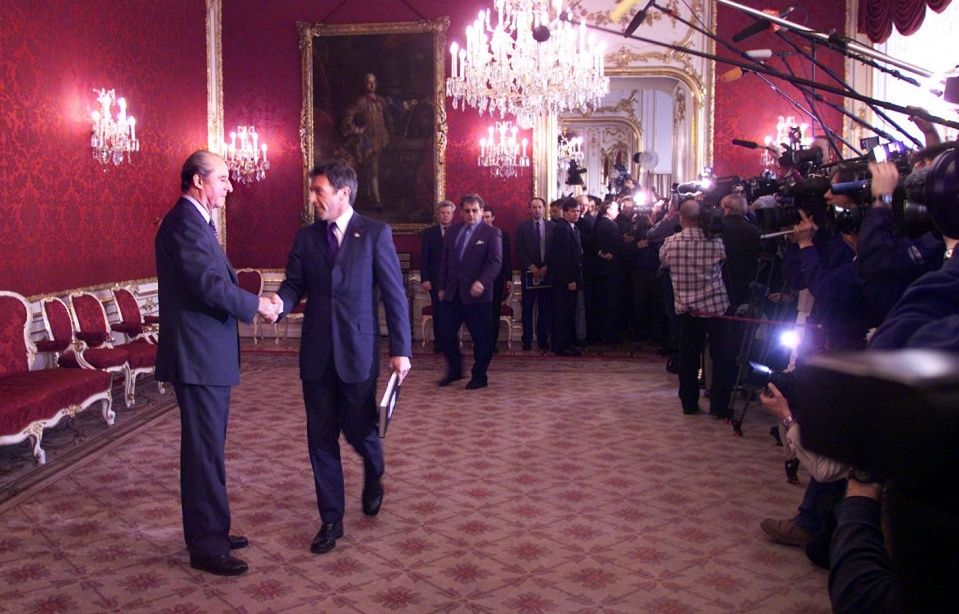
01-02.: The likely last session of the Ministerial Council of the red-black coalition takes place with unprecedented interest of domestic and foreign media. Klima emphasizes, that the attacks aren’t directed against Austria. After the last session, FPÖ and ÖVP announce the successfull end of the negotiations. The EU-Commission shares the concerns of the presidency, but doesn’t threaten sanctions. The USA consider, in case of a FPÖ government involvement, the same measures as the EU.
02-02.: Klestil welcomes Heider and Schüssel. He talks extensively in a newspaper interview: If he were to make a vow to Blue-Black, then „not because I’m personally convinced, for I fear that Austria will be harmed on an international level“. Simulatenously, he announced that he would welcome both heads of the parties to receive the list of ministers and to let a self-written preamble to the government program get signed. Both party boards accept the government program. Israel makes the decision to withdraw their ambassador from Vienna indefinitely, in case of a FPÖ government involvement.
03-02.: Federal President Thomas Klestil accepts the government program of the FPÖ and the list of ministers after two annulations. The preamble of the government program was written by Klestil. Israel imposes a refusal of entry on Heider.
04-02.: Inauguration of the cabinet Wolfang Schüssel (ÖVP) – Susanne Riess-Passer (FPÖ | 1961-Present).
17-02.: Karl-Heinz Grasser (FPÖ | 1969-Present), Minister of Finance, announces a Necessity to Save of 200 billion shilling.
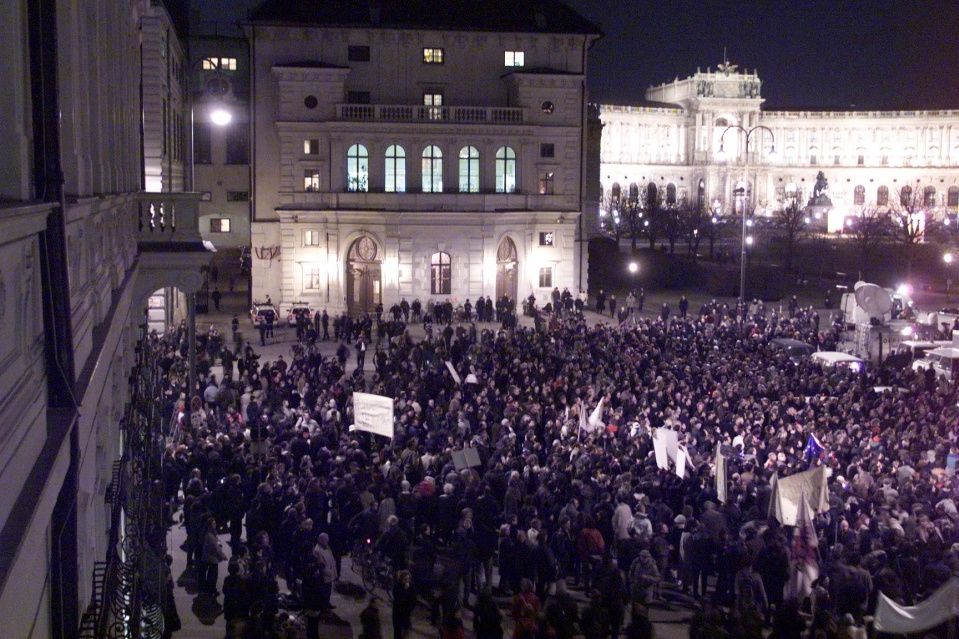
19-02.: Over 100,000 people demonstrate against the government in the inner-city of Vienna.
24-02.: The first Thursday-Demonstration.
28-02.: Jörg Heider announces his resignation from the FPÖ-Chairman position and becomes a „simple member“. On May 1, Vice-Chancellor Riess-Passer becomes the new FPÖ-Obfrau (head of the FPÖ). The Portuguese EU-Presidency immediately explains that the position of the 14 member states remains unchanged.
29-02.: Michael Krüger (FPÖ | 1955-Present) resigns from his position as Minister of Justice due to overburdening. His successor, FPÖ-Party Lawyer Dieter Böhmdorfer (1943-Present), would later get under pressure due to the Spy Affair (Spitzelaffäre).
(Source: Der Standard)
March
20-03.: Attempt of the governing parties for a „national solidarity“ against EU-sanctions fails.
23/24-03.: EU-Summit in Lisbon. Federal Chancellor Wolfgang Schüssel woos for an end of the sanctions. EU-President of the Council, Antonio Guterres (1949-Present), refuses.
(23 and 24 March: https://www.europarl.europa.eu/summits/lis1_en.htm)
April
05-04.: The Council of Ministers agrees on the corner points of the pensiom reform.
06-04.: A delegation of the European People’s Party (EPP) wants to get an idea of the situation in Austria and seeks to put forward a report by June. Meanwhile, the ÖVP suspended her membership in the EPP. With that, a request of expulsion of the ÖVP is off the table.
07-04.: In Vienna, the European Post for the Monitoring of Racism and Xenophobia (EUMC) opens. Even though the Austrian government was invited to opening ceremony, Foreign Minister Benita Ferrero-Waldner (1948-Present) attends it.
(Since 2007 EU Agency for Fundamental Rights: https://european-union.europa.eu/institutions-law-budget/institutions-and-bodies/search-all-eu-institutions-and-bodies/european-union-agency-fundamental-rights-fra_en)
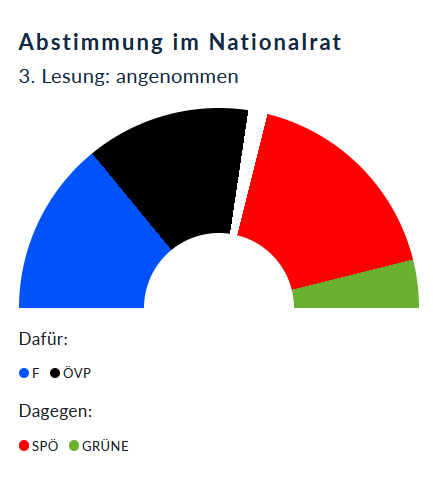
27-04.: The National Assembly votes in favour of the Accompanying Budget Law 2000 (Budgetbegleitgesetz). Taxes and Duties are increased in the year 2000 by 6.9 billion shilling to 11.2 billion shilling in total.
29-04.: Alfred Gusenbauer (1960-Present) becomes the new head of the SPÖ.
(source: Parlament Österreich)
May
05-05.: The government creates a plan of action against the EU sanctions. The last of 18 points is public opinion poll.
08-05.: During an informal meeting on the Azores formulates Benita Ferrero-Waldner (ÖVP) for the first time the idea of a Council of the Wise as a possible exit scenario from the sanctions of the EU-14. However, she also demands the suspension of the sanctions.
(The Azores are an autonomous region of Portugal, it consists of 9 major islands and lies in the North Atlanic Ocean about 1,600 km (1,000 miles) away from Portugal: https://www.britannica.com/place/Azores)
13-05.: The proposal of Ferrero-Waldner is deemed „inconceivable and absolutely ruled out“ by FPÖ-Klubobmann Peter Westernthaler (1967-Present).
18-05.: The National Assembly passes the Budget 2000. The opposition criticizes the package as a „package of burden“ for the socially weaker.
27-05.: Ferrero-Walnder becomes skeptical of monitoring Austria. She proposes the EU-Commission should write a report about the events since the formation of the government instead.
June
03-06.: The representatives of the railroad workers are the first trade union to decide in favour of a strike in response to the pension reform.
06-06.: The European People’s Party (EPP) attests Austria that since the beginning of the FPÖ-ÖVP government it came to „no impairment of the democratic system“. The ÖVP was invited for full participation in the EPP.
„Austrian People’s Party members began today resumption of their responsibilities and involvement in parliamentary governing committees. The EPP vote Wednesday, however, leaves unaffected the diplomatic sanctions imposed by the EU governments generally against Austria. Austria’s 14 EU partners imposed those sanctions because of concerns the Freedom Party was not sufficiently committed to democracy and human rights. These are sanctions that have remained in force even though Haider resigned May 1 as Freedom Party leader.“
(UPI – EU parliament welcomes back Austrian centrists | June 7 2000: https://www.upi.com/Archives/2000/06/07/EU-parliament-welcomes-back-Austrian-centrists/3804960350400/)
09-06.: Berlin and Paris explain that, at the EU-Summit in Feira (Portugal) near the end of June, there’ll be no change regarding the position towards Austria.
19/20-06.: At the conclusion of the EU-Summit in Feira, Guterres announces an initiative of Portugal for an exit scenario.
27-06.: In Brussels, a consented EU-14 proposal was made known. In this proposal, the sanctions against Austria will remain. Guterres makes a request to the head of the European Court of Human Rights that the „Three Wise Men“ should create a report. The president of the court, the Swiss Luzius Wildhaber (1937-2020), demanded the consent of Austria for such a mandate.
28-06.: Day of Action of the ÖGB against the austerity plans of the government with demonstrations all across Austria and a railroad worker warning strike. The Austrian OTS reported that there were over 600 actions across Austria that day (it’s in German, though: https://www.ots.at/presseaussendung/OTS_20000628_OTS0380/erfolgreicher-aktionstag-des-oegb | The ÖGB is the Österreichischer Gewerkschaftsbund = Austrian Trade Unionist Association, as of 2023 it has 1.2 million members).
29-06.: The EU-14 agree on the deployment of the „Weisenrat“ (Council of Wise Men) which should assess the work of the Austrian government. Schüssel consents to cooperate with the „Three Wise Men“, but reveals he’s disappointed in the EU-14.
July
04-07.: By the end of the legislative period in 2003, the government wants to present a balanced general government budget. One week later, the period is scaled back to 2002.
The planned public opinion poll of the government is made dependent on the report of the Council of the Wise Men.
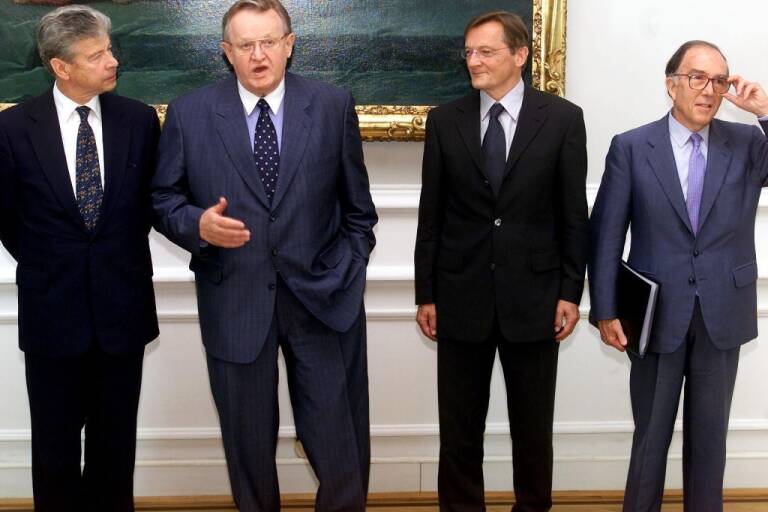
12-07.: Luzius Wildhaber reveals the names of the Three Wise Men. Part of the council are the former President of Finland Martti Ahtisaari (1937-2023), the former Spanish Foreign Minister Marcelino Oreja Aguirre (1935-Present) and the German Expert in International Law Jochen Abraham Frowein (1934-Present).
28/29/30-07.: The Three Wise Men visit Austria.
The council was tasked with investigating the treatment of minorities, refugees and immigrants as well as examining the essence of the FPÖ (Der Spiegel, EU-Weisen in Wien: Die Beobachtung kann beginnen | 28. Juni, 2000 | https://www.spiegel.de/politik/ausland/eu-weisen-in-wien-die-beobachtung-kann-beginnen-a-87220.html)
(Image source: Salzburger Nachrichten)
August
– – –
September
08-09.: The Three Wise Men recommend the removal of the sanctions. Four days later, the sanctions were removed. However, the EU-14 show „serious concern“ over the „nature of the FPÖ“.
19-09.: The government puts forward their package for social marksmanship (soziale Treffsicherheit) which, among other measures, include the introduction of university fees.
(Criticism against the package which would cut the residential building subsidies and worsen the unemployment insurance of the construction workers: https://www.ots.at/presseaussendung/OTS_20000810_OTS0162/soziale-treffsicherheit-darf-nicht-sozialabbau-heissen | OTS | Language: German | August 8, 2000)
October
01-10.: The former FPÖ-Police Trade Unionist Josef Kleindienst (1963-Present) reports for the first time about the „Spy Affaire“ (Spitzelaffäre). During the investigations, it comes to a serious dispute between the FPÖ and Minister of the Interior Ernst Strasser (ÖVP | 1956-Present).
03-10.: After six round of negotations and an open threat to strike, the government and the Trade Union for Civil Servants agree on a salary deal.
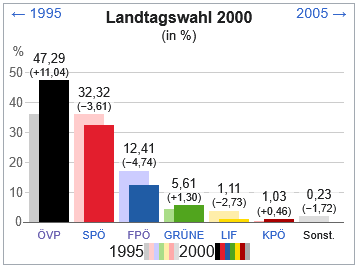
16-10.: After the loss in the local elections in the Steiermark, Jörg Heider threatens with new elections should the ÖVP not end their „double tracked strategy“.
22-10.: Social Affair Minister Elisabeth Sickl (FPÖ | 1940-Present) has to leave the government. She’s replaced by Herbert Haupt (FPÖ | 1947-Present).
24-10.: In Vienna, treaties about the compensation of NS-slave labourers are signed.
Austria committed herself to pay around 150,000 former NS-slave labourers between 5,000 and 15,000 shilling.
25-10.: In the Spy Affair, the Depart of Public Prosecution initiates investigations into Haider and the Lower Austrian Ewald Stadler (FPÖ | 1961-Present).
(Source: Wikipedia)
November
03-11.: Head of the FPÖ, Riess-Passer, says the investigations into the Spitzelaffäre represents a „very serious situation for the coalition“.
04-11.: Michael Schmid (FPÖ | 1945-Present), Minister for Infrastructure, is the third member of the government who resigns. „The batteries are empty.“ Successor to him is Monika Forstinger (FPÖ | 1963-Present).
December
05-12.: Teacher strike, street blockade and ÖGB-human chain around the parliament: in Vienna and other cities of Austria demonstrations took on the street to protest against the austerity policies. On the following day, the National Assembly passes the budget 2001 with the votes of the coalition (-> the human chain had 10,000 participants and formed the human chain around the precinct of the parliament: Der Standard | Kleine Geschichte des Streiks in Österreich | May 3, 2003 | https://www.derstandard.at/story/1287311/kleine-geschichte-des-streiks-in-oesterreich)
2001
January
17-01.: Negotiations in Washington about the compensation for NS-victims reaches an agreement. It is agreed upon to pay nearly 15 million shilling.
(-> 20th Anniversary of the Washington Agreement – a Review https://www.nationalfonds.org/washington-agreement)
February
03-02.: On the evening before the anniversary of the inauguration of the government, a demonstration against the Black-Blue government takes place.
This concludes the timeline of the first ÖVP-FPÖ government.
To our misfortune, the far right has been more trivialized and is now on a global resurgence. It’s not too late by any means, and there’s still time to act and at least prevent the worst by mobilizing civil society. But it will be hard, especially if your country is already plagued by a far-right government. We don’t have to wipe the global far-right out by tomorrow night (as much as I would love to do that if I had this power), but rather work step by step to not get discouraged if we don’t immediately achieve the bigger goals.
From local elections (which also worked in East Germany where the AfD usually polls extremely high, up to 30% or more) to presence on the streets (demonstrations, events by pro-democratic organizations) and activity in social media too (not necessarily X, which is pretty much in the hands of the far-right radical Musk who can and will use the algorithm to your disadvantage – best is to leave it be and show the middle finger to him).
Our future is not theirs to take!
 Baroque