
Between 1946 and 1948, the US government conducted an unethical, immoral and inhumane experiment involving at least 5128 vulnerable people. In this blog entry, meant to shed light on this dark chapter of US history, I’ll give a summary of what happened.
Note: In this new series, which I call „The Archivist“, I’ll talk about crimes like this and other events which received not much attention or may even have been forgotten. As it is meant to be a pamphlet as well, it is overall quite compact and aims to spark more interest in the topic. The article will also be available as a PDF-file – ready to be printed.
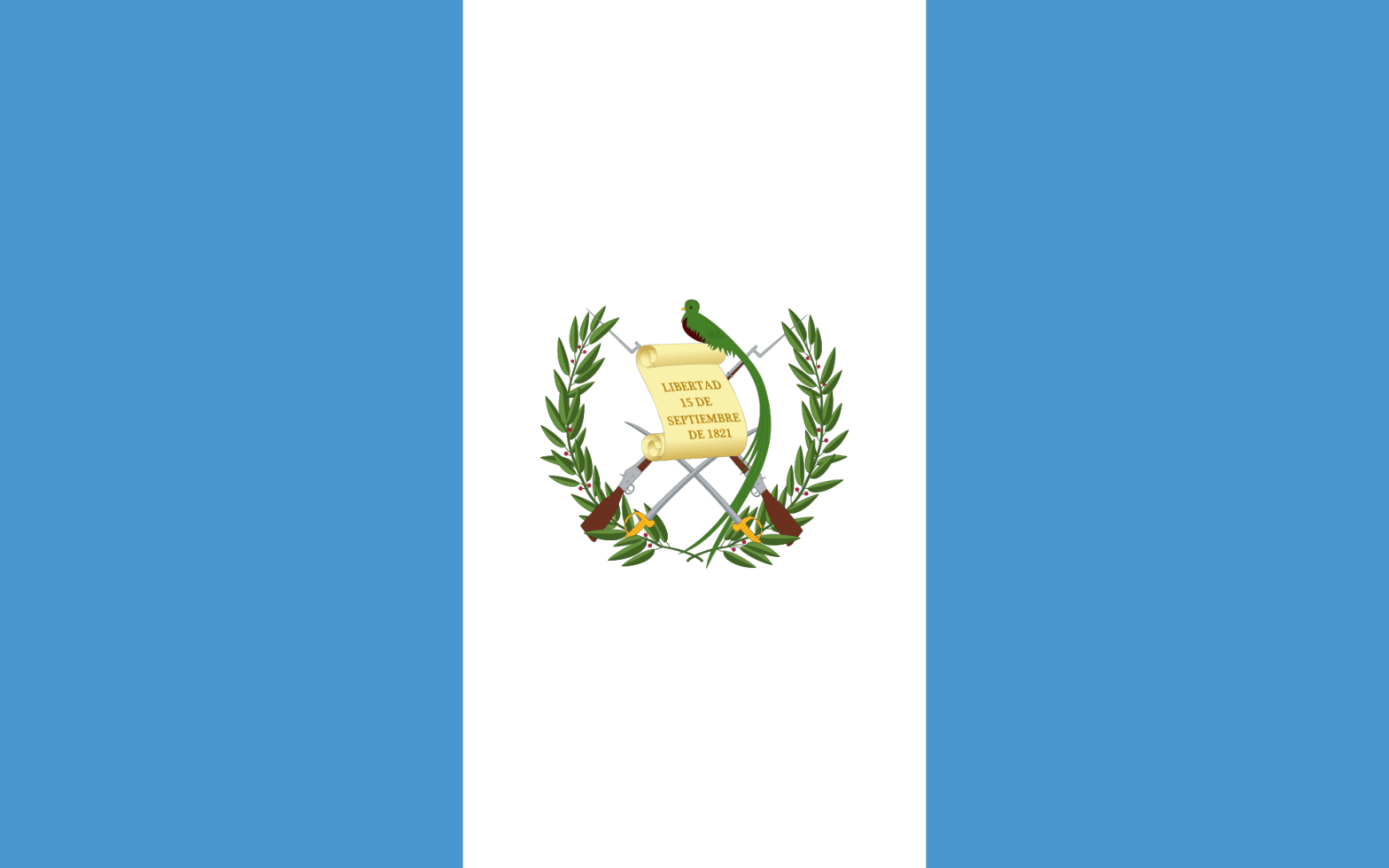
Between 1946 and 1948, the US government conducted an unethical, immoral and inhumane experiment in Guatemala. Originally, it started with prisoners at Terra Haute, Indiana. It was moved to Guatemala after the researchers were unable to consistently produce gonorrhea infections. However, first a few facts about the country we are talking about to get a better picture of it.
Guatemala – Facts and Figures
| Official Name | Republic of Guatemala |
| Surface Area | 108,889 km² (42,041.9 mi²) |
| Population | 18.2 million |
| Capital | Guatemala-City |
| Official Language | Spanish |
| Currency | 1 Quetzal = 100 Centavos |
| National Day | September 15 (1821) |
From the 16th century (1500) until its independence in 1821, Guatemala was under Spanish colonial rule. Unlike Mexico or Peru, it didn’t have large deposits of precious metals. The major economic activity revolved around the export of indigo and cacao cultivated by Indigenous or African slave labour.
1838-1865: Uprising led by Rafael Carrera led to the collapse of the United Provinces of Central America. The regime is described as being similar to colonial rule, Carrera had the support of indigenous people and conservative estate owners. War of 1863 against El-Salvador.
1871-1944: Miguel García Granados and Justo Rufino Barrios led a revolution and successfully overthrew Gen. Vicente Cerna, Carrera’s conservative successor in office. In 1931, a military coup installed Gen. Jorge Ubico as president without opposition – the fourth dictatorship.
1954-1996: Starting in 1954, Guatemala’s government faced a guerilla opposition which sparked a civil war that would last for 36 years.
The indigenous people in particular suffered during the civil war, a light was shed on their struggles by Rigoberta Menchú, a Quiché Maya and an advocate for indigenous communities. She received the Noble Peace Prize in 1992.
In case you want to learn more about the history of Guatemala, especially in greater detail, check out the Encyclopedia Britannica:
https://www.britannica.com/place/Guatemala
The US Sexually Transmitted Disease Experiments in Guatemala
As stated previously, the medical experiments were conducted between 1946 and 1948 by Public Health Service investigators who were funded by the National Institutes of Health and cooperated with Guatemalan authorities. John C. Cutler (1915-2003), a scientist from the US Public Health Service, directed the research.
- 5,128 vulnerable people were involved in the study of whom 1,308 were infected by health officials with syphilis, gonorrhea, and chancroid while on others serology tests were conducted.
- Among these vulnerable people were children, orphans, child and adult prostitutes, Guatemalan Indians, leprosy patients, mental patients, prisoners, and soldiers.
- None of the participants were informed, neither did the experiments happen in a sterile clinical environment in which bacteria that caused Sexually Transmitted Disease (STD) were administered in the form of a pin prick vaccination or a pill taken orally.
The following example shows the scale of cruelty and suffering we deal with:
“Berta was a female patient in the psychiatric hospital. Her age and the illness that brought her to the hospital are unknown. In February 1948, Berta was injected in her left arm with syphilis. A month later, she developed scabies (an itchy skin infection caused by a mite). Several weeks later, [lead investigator Dr. John] Cutler noted that she had also developed red bumps where he had injected her arm, lesions on her arms and legs, and her skin was beginning to waste away from her body. Berta was not treated for syphilis until three months after her injection. Soon after, on August 23, Dr. Cutler wrote that Berta appeared as if she was going to die, but he did not specify why. That same day he put gonorrheal pus from another male subject into both of Berta’s eyes, as well as in her urethra and rectum. He also re-infected her with syphilis. Several days later, Berta’s eyes were filled with pus from the gonorrhea, and she was bleeding from her urethra. On August 27, Berta died.”
- 62 years later, in 2010, then-President Barack Obama apologized to Guatemalan President Alvaro Colom and the people affected.
- 2 reports have been issued since, the “Ethically Impossible” STD Research in Guatemala from 1946–1948 and Moral Science: Protecting Participants in Human Subjects Research (2011). The first condemning the experiments as unethical under current standards and the other acknowledging that the US can’t confirm “that all federally funded research provides optimal protections against avoidable harms and unethical treatment today” as well as pushing for reforms which hadn’t been implement by the time the article I cite was published (December 2013).
- A separate report was published by the Guatemalan government called “Consentir el Daño: Experimentos Médicos de Estados Unidos en Guatemala (To Agree to the Harm: Medical Experiments by the United States in Guatemala)”. However, unlike the US’ report it stated that the experiments were “a crime against humanity” and that racism and discrimination were present throughout the experiment – consciously and explicitly.
There was a class action lawsuit in Spring 2012 on behalf of the victims and their survivors, the facts were not disputed but the court rejected it on sovereign immunity.
The Department of Health and Human Services announced on January 10, 2012 a funding of approximately $1.8 million for the improved treatment and prevention of STIs, further there was funding of global human research protection. The victims still received no compensation.
“The Guatemalan report called for reparation and compensation for the victims. In addition, 2 independent reports, written by the United Nations and the Catholic Church on human rights violations and genocide in Guatemala from the 1950s to the 1990s, bolster the Guatemalan commission’s declarations with respect to discrimination, reparations, and human rights and highlight weaknesses in the US reports. There is little evidence that the US government, the public health community, academic publications, or the media have acknowledged the Guatemalan report.”
These inhumane experiments we have discussed here may remind you of the Tuskegee experiments from 1932 to 1972.
400 African-American men were victim of this study and deceived into participating by claiming that they’d receive treatment. Unlike in the Guatemalan study, they already were infected. For 40 years, the same principal investigators withheld effective therapy for this life-threatening illness. It was a long way before they received compensation for this cruel experiment:
“However, reparation in Tuskegee was made only after organizations championed the cause, made the wrongful acts known to the general public, sought access to justice through the courts, and applied pressure on the government to take action. This has not occurred in the context of the Guatemalan STD experiments.”
The payment in Tuskegee had this structure:
$37 500 for each living participant
$15 000 for each surviving dependent
$16 000 for each living control group participant
$5000 to heirs of deceased members of the control group. In Total: $10 million in 1974.
For further reading on the topic: First, Do No Harm: The US Sexually Transmitted Disease Experiments in Guatemala (source: NIH).
Pamphlet
Sources
First, Do No Harm: The US Sexually Transmitted Disease Experiments in Guatemala
https://www.ncbi.nlm.nih.gov/pmc/articles/PMC3828982/#bib8
Guatemala
https://www.britannica.com/place/Guatemala
War of 1863
https://en.wikipedia.org/wiki/War_of_1863
‚Ethically Impossible‘: STD Research in Guatemala from 1946 to 1948
https://papers.ssrn.com/sol3/papers.cfm?abstract_id=2456798
Moral Science: Protecting Participants in Human Subjects Research
https://papers.ssrn.com/sol3/papers.cfm?abstract_id=2457089
Guatemala: Memory of Silence (UN Report)
https://www.documentcloud.org/documents/357870-guatemala-memory-of-silence-the-commission-for.html
Fiftieth Anniversary of Uncovering the Tuskegee Syphilis Study: The Story and Timeless Lessons
https://www.ncbi.nlm.nih.gov/pmc/articles/PMC9872801/
Author’s Note: In the future there’ll be more articles like this, rather short and compact but still with all the research I also invest in longer articles. The longer articles won’t disappear, that’s for certain. Moreover, next to less known events it also allows for more flexibility as I have many interests – especially in history, from prehistory and ancient times to recent history. Hopefully, you like this content too and look forward to more just as I do!
 Baroque