In 2018, Steve Bannon said in an interview that the best way to deal with the media landscape is to „flood the zone“ – meaning to continually attempt to not only overwhelm the opposition but also the media by making various moves that would be difficult to respond to all at once. This is now the very strategy we see the White House deploying through the massive amounts of executive orders and the DOGE department while ignoring court orders; it is also used by far-right movements and political parties who still seek to come into power by flooding civil society and the media with conspiracy theories, outright lies and disinformation spread through social media or on talkshows.
In this blog entry, I want to propose a strategy to stop these flooding attempts.
Not only for the media, but also for civil society, political parties, local groups and individuals. We have to fight the anti-democratic forces every inch on the way, but focused and on our terms – unbothered by their meager waves clashing against our gates.
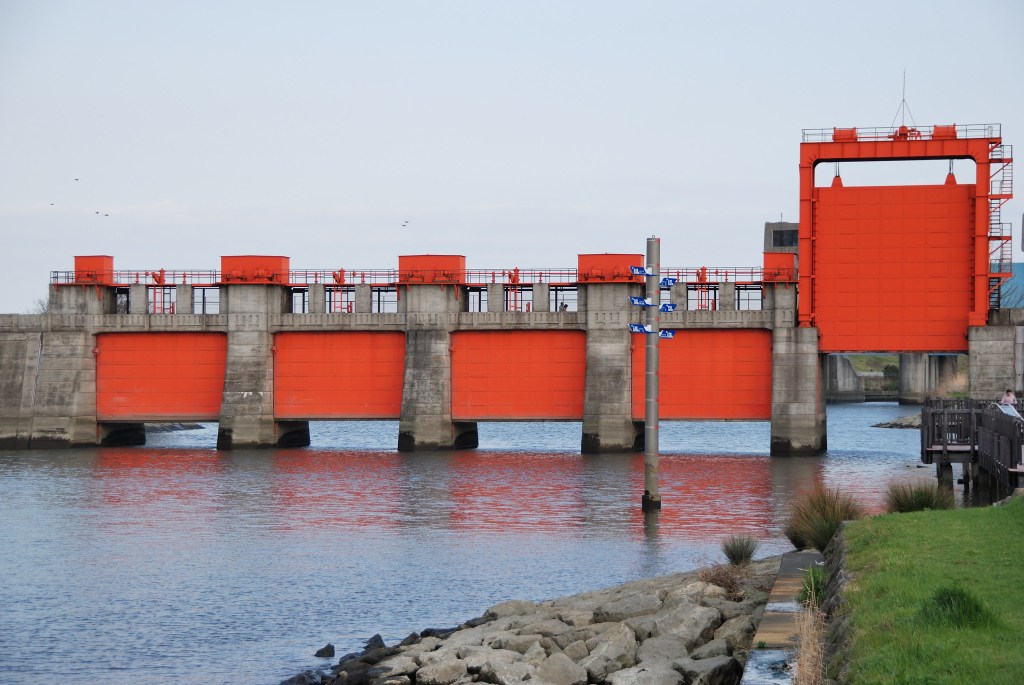
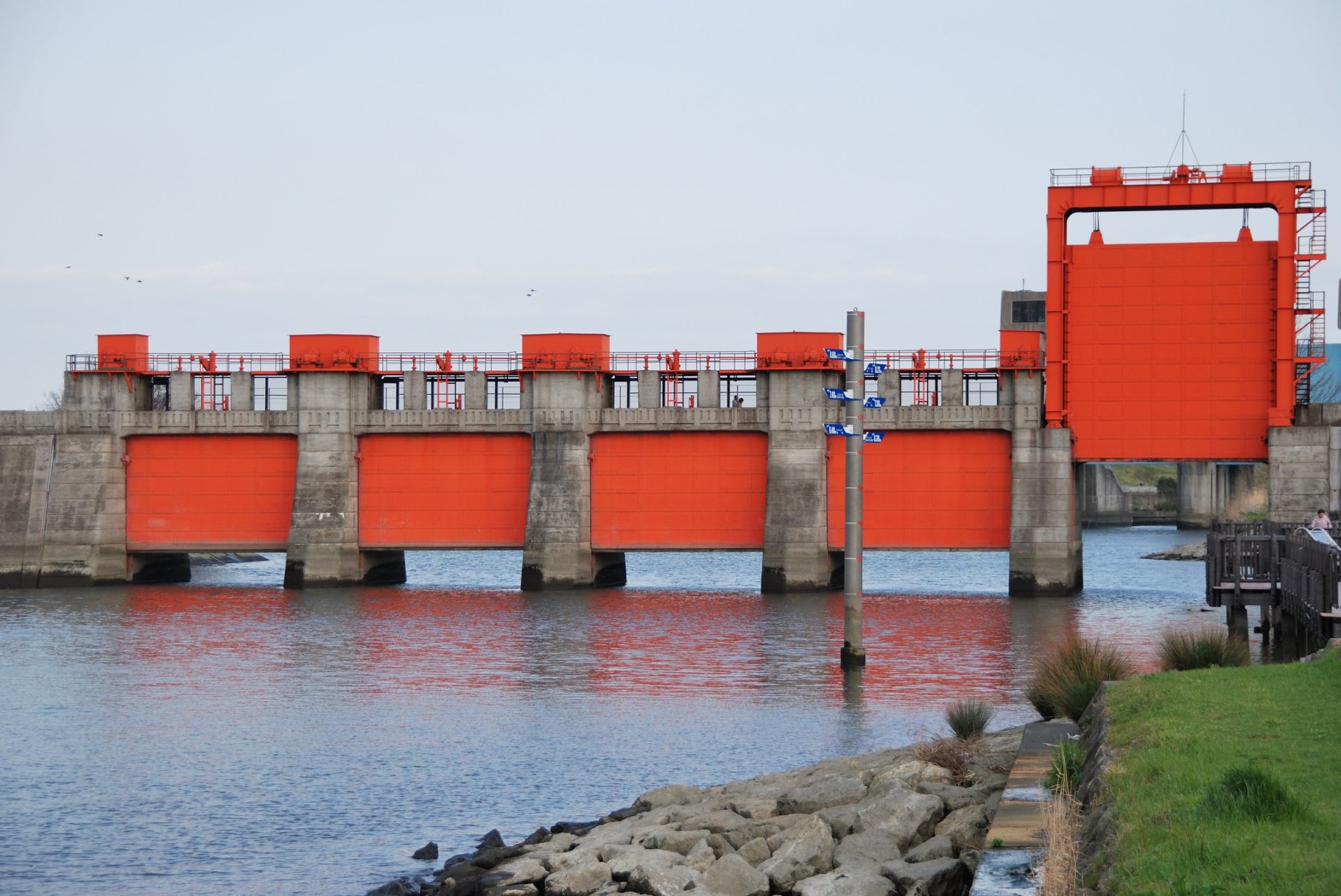
This photo was taken by ykanazawa1999 (from Flickr) on March 22, 2010 with a Nikon D60 camera.
(Image source: https://www.flickr.com/photos/27889738@N07/4885149063/)
Between January 20, 2025 (the day of the inauguration) and January 31, 2025, Donald Trump already signed 46 executive orders (EOs). 1/4th of the total amount of EOs he signed during his first administration and 1/3rd signed during Biden’s presidency.
These EOs covered a wide range of policies: from transgender rights to tariffs on neighbouring countries. Overall, there were 217 executive actions (which also includes memos and proclamations) since January 20.
Meanwhile, the Department of Government Efficiency (DOGE) also worked at a breakneck speed which already had a major impact on USAID – stopping not only food and vaccination programs, but also widlife conservation and environmental programs: „In late March, the Trump administration told the U.S. Congress it had terminated 5,341 projects worth a total of $75 billion (86 percent of its portfolio), and the State Department said it will reduce USAID to the legally required 15 people, thus ending its existence in all but name.“
(source: YaleEnvironment360)
Recognize the Pattern
These attacks didn’t come out of nowhere, as we have seen with the tariffs too.
They were either already part of a plan written down (like Project 2025) or campaigned on (e.g. crashing the economy, something Elon Musk advocated for). Individual politicians may even wrote a book about it (like the fascist Björn Höcke, from the confirmed right-wing extremist party AfD, leader of the local party branch in Thuringia), laying out their plans for everyone to see. They should be taken by their word and fought accordingly.
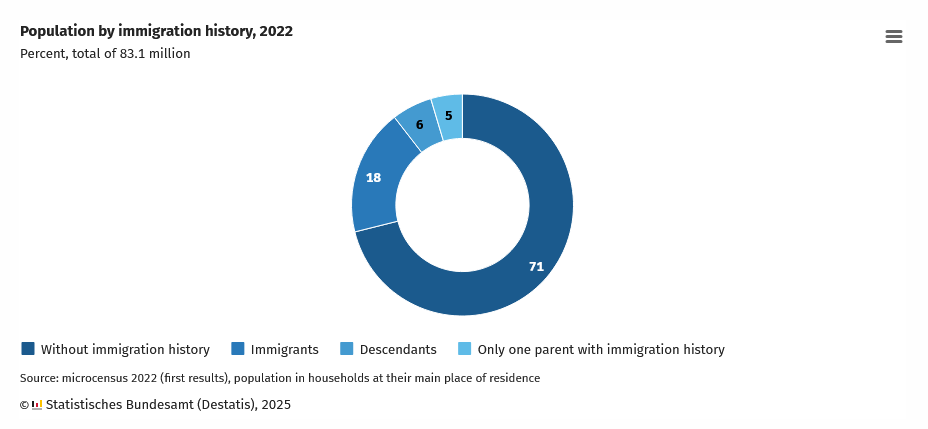
Mid-2018, Höcke published his book „Nie zweimal in denselben Fluss“ (= Never go in the same river twice) where he writes about a „death of a people through a population replacement“ (also known as the „Great Replacement“ lie pushed by the far right). The central goal of his party, the AfD, is a purge to destroy anything they consider culturally foreign – for Höcke, this means people of Asiatic and African origin. It is here where he talked about a „remigration project“ (= mass deportations of German citizens) which was discussed in the infamous Potsdam meeting five years later in late November 2023. He tries to justify it by claiming that his imagined existential crisis requires „well-tempered cruelty“ and would be more than willing to lose other parts of the German people who are „too weak or unwilling“ (most likely the disabled and the any dissidents to his planned terror regime). For reference: 24.3% of Germans have an immigration background.
His influence has only grown ever since, this radicalization is the reason why a party ban procedure (which is then examined by our independent German constitutional court) has been part of the public discussion. It’s a weapon the founding fathers and mothers of the Second German Republic gave us as a lesson from the Weimar Republic which ended in Nazism and thus in mass genocide, a devastating war and unimaginable suffering by 1945.
When it comes to policies that first look chaotic, we have to search for patterns.
Here, again, we look at the US and how they deport immigrants and US citizen without due process. By April 3, 2025, nearly 300 people were already being imprisoned in El Salvador at U.S. request, among them people like Andry Hérnandez (a gay makeup artist, his tattoos reading „mom“ and „dad“ with a crown on top were determined to be likely gang tattoos by an ICE officer) and Frengel Reyes (despite having no tattoos, criminal history or any connections to Tren de Aragua). In the same month, a 4-year old boy who received treatment for a rare treatment of cancer was deported to Honduras without medication with his 7-year old sister (both US citizens). There was another case of a 2-year old US citizen who was deported with her mother. The mothers were given no choice.
Two more examples: Mahmoud Khalil, a permanent resident, was deported without an arrest warrant and Kilmar Abrego Garci despite a court order ‚barrying his removal‘ (NBC).
The Associated Press wrote about the timeline of Garci’s unlawful deportation:
https://apnews.com/article/kilmar-abrego-garcia-trump-el-salvador-return-b844a1e652cf639be5b4400ae735003f
Historically, this kind of arbitrary arrest without any indictment or fair trial of a particular group is called a concentration camp. It was most intensively used by the Nazis, but also by the Soviets, the British during the South-African War (1899-1902) and the US when more than 100,000 Japanese-Americans were imprisoned after outbreak of hostilities in December 7, 1941 (after the Pearl Harbour attack).
It should not be mixed up with the extermination camps used by Nazi Germany: Chelmno, Treblinka, Sobibor, Auschwitz, Belzec and Majdanek. These were camps specifically designed to annihilate groups deemed unworthy of life, especially the European Jewry.
The pattern we see in this instance is the deliberate undermining of the rule of law (by refusing to give immigrants a fair trial) and an attack against certain ethnic groups regardless of their legal status. It is reminiscent of the ideas of Höcke which have their roots in fascist ideology and the white supremacy that has been a problem in the US for decades. It is here where we take our first approach to mitigate the flood: we have indentified the causes (despotic rule and white supremacy) and know what we want to defend (constitutional democracy with legal certainty and country of immigrants*).
It serves as a common denominator and rallying point, the examples above – and probably many, many more that will accrue – reminding for whom you fight.
The Enlightenment as a home base and unfinished work also serves as a foundation.
„Enlightenment is man’s release from his self-incurred tutelage. Tutelage is man’s inability to make use of his understanding without direction from another. Self-incurred is this tutelage when its cause lies not in lack of reason but in lack of resolution and courage to use it without direction from another. Sapere aude! ‚Have courage to use your own reason!‘- that is the motto of enlightenment.“ – Immanuel Kant, An Answer to the Question: What Is Enlightenment?
*Note: Not every country fits that label, so adjustments are required depending on where you live and what else could serve as a common denominator in your political landscape.
Categorize
With that in mind, we now have a common denominator.
While it helps us to set an ideal for what your and mine country ought to be, it does not address other topics that are under attack by the far-right: from environmental protection to LGBT-rights and democratic institutions. Here we face a near endless onslaught from the reactionaries too, in the information age a tool to tire out the opposition and dominate the discourse. Consequently, we have to conserve our energy and distinguish between meaningless provocative statements (like party X or Y wants to prohibit thing A or B with no evidence at all) and actual issues (attacks against organisations of civil society, disinformation about climate change and else).
Provocative Statements
These are usually made in the sphere of the culture war, meant to distract from actual issues. Since it is the far-right that started this, there’s no point in engaging it unless there’s a serious threat (e.g. if artists, authors, other individuals or groups receive threats or are harassed for expressing their opinion or participating in events they deem „degerenate“). Hence there’s no point in staying on platforms like „X“ (formerly known as Twitter) or Facebook where rage- and clickbait are used by the algorithm to drive engagement. Neither is there any value for media companies, except tabloids, who seek to inform their readers about important events. Sometimes it is better to write nothing than to waste time on a meaningless debate. Another approach we should internalize, as difficult as the information age may make it, is to not instantly rush on social media when a possible attack happened that harmed innocent civilians. First, we should mourn. Then we should let the police do their work until they have figured out who did it and why it was done. Speculation won’t help us and enemies of democracy, like the Russian government, will most likely use it to spread uncertainty through disinformation. Politicians, who at least have any sense of honor left, shouldn’t jump the gun either. Expressing compassion is important, taking care of the victims is important and letting law enforcement do their work is important. The more people internalize it, the less susceptible our society becomes to disinformation and the more resilient our democracy becomes.
Instead of a culture war that is meant to distract, political parties (in particular) should focus on their own policies. Not adopting any rhetoric of the enemy, as it is only beneficial to them, but by pushing for policies that benefit the country and its people in the long-term. It is the task of the reputable media outlets to objectively (not neutrally) report and discuss topics (e.g. climate crisis) and expose the way how the anti-democratic enemies try to manipulate the public discourse and strive for the corrosion of social cohesion.
And never, ever, just put the quotes of someone as a title without a classification (as in: X falsely claimed […], Y defames their verdict as […], etc.).
Actual Issues
Before we move on with this category, it is important for those who have to engage them face-to-face that whenever they try to change subject (in a panel discussion or an interview, for instance, when they move from a topic like pension to anti-immigrant rhetoric or other usual scapegoats) you have to throw sand into their gears immediately.
State clearly that it is irrelevant (also in case they attempt to distract from a discussion on far-right violence) and pressure them into exposing their cluelessness. It’s more difficult, but important. Do not let them gain a foothold. Remain steadfast.
When it comes to the actual issues facing us (the climate crisis, wealth and income inequality, loss of biodiversity, academic freedom, protection of civil society, etc.) it is essential to put our message in the foreground. Translate it to the local level and how it will affect an individual and the community at large: how combatting the climate crisis and wealth inequality are connected, what can already be done on the lower levels of government (depending on the kind of structure your country has, i.e. the amount of autonomy of a region), and how everyone would benefit from such a measure.
Vice versa, it is extremely important to emphasize what will happen if society at large looks away from attacks on civil society (like organizations who help with political education, do important work to combat extremism or help immigrants to integrate).
On an individual level, this can be done on a day-to-day basis too. Whether you overhear the repetition of false information or talk with colleagues, classmates, friends, family or with strangers at your local farmer’s market about recent events.
While it is already done to some extent (depending on the news outlet), explaining the patterns as described before helps those who do not have the time to read dozens of pages of information to reach a broader understanding. Especially in the context of the climate crisis (the interconnected and interdependent reality of our global ecosystem, the economy and society).
Categorization by Topic
Even with the two gates set up, there’s still the problem with the bulk action the US is particularly plagued by. Since both the House and Senate have a Republican majority, and the Democrats being weak in their response, there will only happen very little unless pressure from civil society builds up. Thankfully, both Bernie Sanders and Alexandria Ocasio-Cortez help to shed light with their Fighting Oligarchy Tour and contribute to it.
Then there are the anti-Trump protests, known as „50501“ (50 protests, 50 states, 1 movement). Perhaps they can take inspiration from the Monday demonstrations in East Germany that occured from 1989 to 1991, different circumstances but with a clear similarity: an authoritarian government. At the end and the beginning, both are fragile.
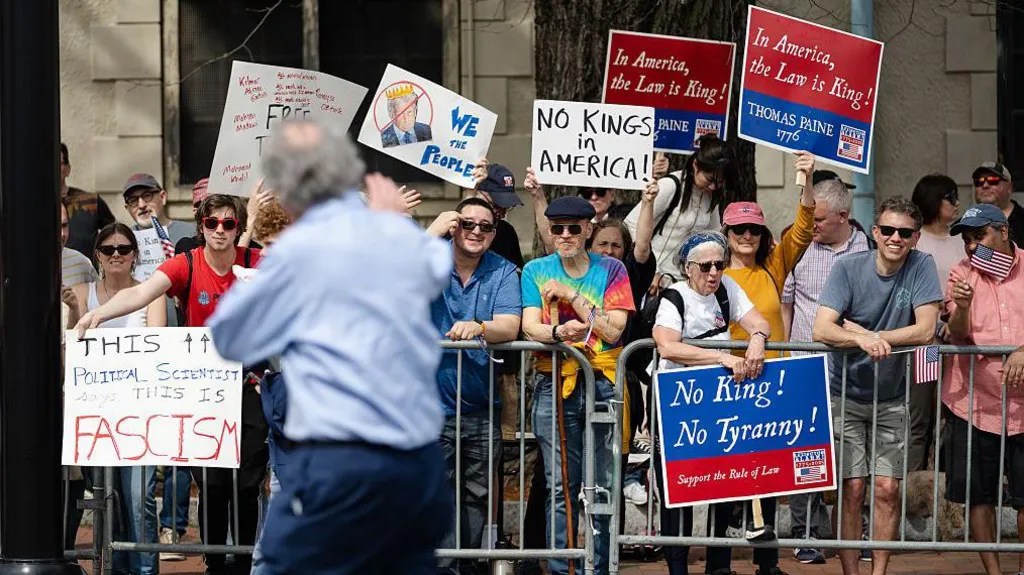
While these protests are going on, the opposition within the country could start with categorizing which action affects which area: the economy, the environment, the welfare state, the legal system, and so on (it doesn’t have to be broad topic, specific fields that are impacted can also be focused on, such as astronomy or women rights). As an individual you can focus on what you know the most about (either due to your profession or interest) and develop counter-measures (e.g. civil disobedience, mitigation if possible, future plans to restore what has been lost, documentation of the administration’s violations).
Even on an individual level, if you are not active in a group, organization, party or a news outlet, it will help to focus and perhaps you find something nearby where you can help out or share your thoughts with like-minded people. Savour each small victory when something gets done on a local or state-level to renew your energy.
Most importantly: find an approach to weaken the overfatique strategy of the far-right.
It’s best to avoid „X“, formerly Twitter, entirely and reduce your time on other social media with an algorithm. The algorithm only promotes content that is most likely to generate an emotional reaction, and while they also serve as a place to inform people by good-faith actors – especially the younger generations who are more active on TikTok – it shouldn’t come at the cost of your mental health (of the user and content creator).
| My support also goes to the the people of Georgia (the country) who protest against their government (-> „Georgian protesters marked their 140th day of opposition against the government on Friday, April 18, but their movement is weakening in the face of escalating repression. With few exceptions, only a few thousand people, and sometimes just a few hundred, now participate in the daily gatherings in this former Soviet republic in the Caucasus – with a population of 3.7 million – compared to several tens or even hundreds of thousands in the fall of 2024.“ Le Monde) and the anti-corruption protests in Serbia which was caused after a canopy of a railway station collapsed (-> On March 16, 2025, the biggest protest yet occured: „The Public Meeting Archive said 275,000-325,000 had attended the protest – „with the possibility that the number was even higher“ […] While the protests over the Novi Sad collapse began with students, they have been joined by taxi drivers, farmers and lawyers.“ BBC). There are countless of other courageous people around the world who either already have to fight within an illiberal or authoritarian country (e.g. Hungary), are threatened by a dictatorship (like Taiwan) or already have to suffer through a war of aggression (like Ukraine). My solidarity is international – from east to west, from north to south. |
Goal
With this strategy I hope to contribute something that helps in the political war against the far-right and other anti-democratic forces. Like a floodgate, it is supposed to direct excess water (here: destructive content) away from the dam (public discourse).
Meaning that we can think with a clearer mind again and keep strategizing until we can launch an effective counter-offensive. Until then, it still remains important to go on the streets and protest in order to show presence and determination.
The media landscape in particular, at least those not on the edges of the political spectrum, have a responsibility in a democracy to help the people in decision-making by reporting objectively. They are a pillar in our democracies and should understand themselves as such, especially public broadcasters. No anticipatory obedience! The enemies of democracy and a free and fair society are your enemies too, no amount of appeasement is going to make them change their minds. The only thing you achieve with it is scaring away the people who actually appreciate your work. What I, and many others, have noticed in Britain (with the BBC) and Germany (e.g. the WDR) is said appeasement. The normalization of the far-right only brings about suffering and destruction, because the far-right is driven by the dehumanization of others and the undermining of democracy.
As for the democratically-minded political parties: there’s no point in engaging in the culture war. We have solutions to the crises we currently face, young people who want a sustainable and just future and democracies that need protection and improvements.
The Red and Blue Flood Gate
With that being said, let’s return to the beginning of this article where I used the Iwabuchi Flood Gate (Red Flood Gate) as the cover image.
The construction of the Iwabuchi Flood Gate took from 1916 to 1924 and it was supervised by Akira Aoyama (September 23, 1878 – March 21, 1963). He also worked as a land surveyor for the Panama Canal after graduating from the University of Tokyo.
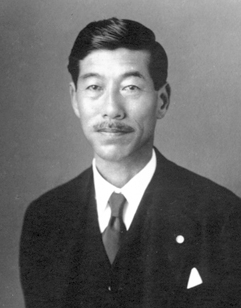
(Image source: Wikipedia)
This floodgate was installed at the branch point „between the Arakawa Floodway and the old river channel (now the Sumida River)“ (GoTokyo). The gates were 9 meters wide and reinforced with concrete. As cornerstone of the flood control plan, its task was to restrict the flow of flood water from the Arakawa River into the Sumida River (both links lead to the blog JapanThis!, in case you are interested check them out).
During the 1950s it was repainted and this is where it got the red colour from, by the locals it was subsequently known as the „Red Flood Gate“. While it no longer serves as a flood gate, after being retired in 1982 and replaced by the „Blue Flood Gate“ downstream, it has been certified as a modern industrial heritage side by the Ministry of Economy, Trade and Industry. The robust structure of the new flood gate can withstand a major flood that occurs once every 200 years; it has three gates that are 20 meters wide and 16 meters tall.
Moreover, it can withstand 1,500 tons of water pressure!
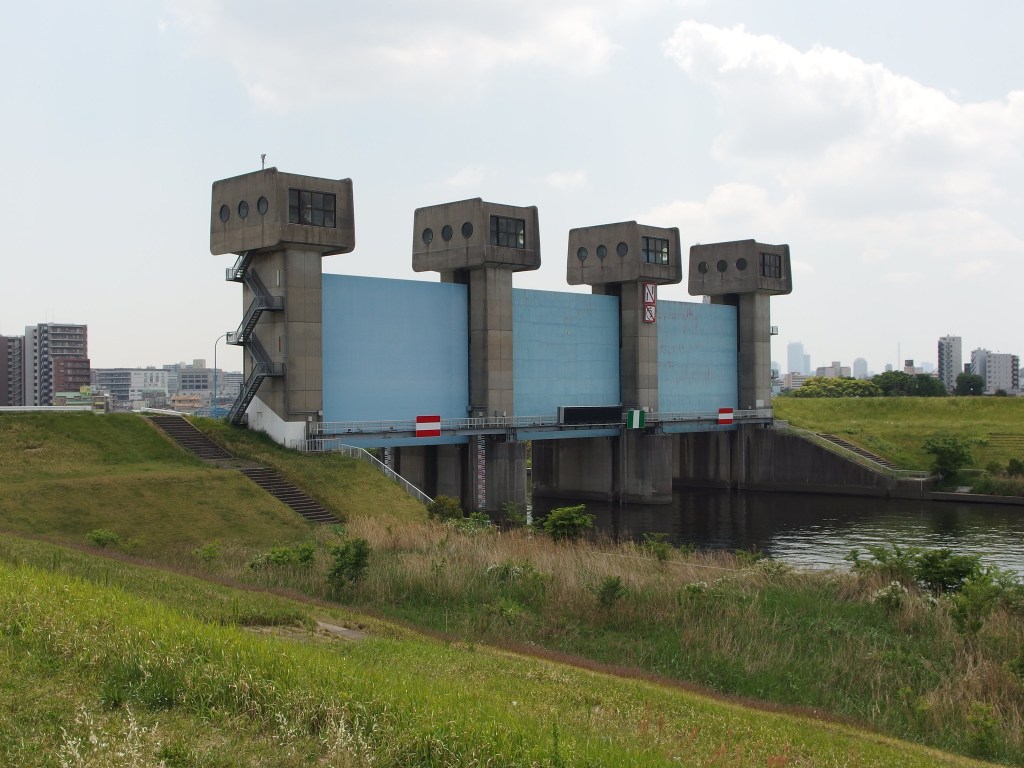
This photo was taken with an Olympus XZ-2 by Guilhem Vellut on May 9, 2014 and uploaded to Flickr on May 11, 2014.
(source: https://www.flickr.com/photos/o_0/13973725017)
— End of the Article —
Sources
Steve Bannon’s ‚Flood the Zone‘ Strategy Explained Amid Trump Policy Blitz
https://www.newsweek.com/steve-bannon-flood-zone-strategy-explained-trump-policy-blitz-2027482
CNN tracked Trump’s executive actions in the first 100 days
https://edition.cnn.com/politics/tracking-trump-executive-orders-actions-dg
U.S. Aid Cuts Are Hitting Global Conservation Projects Hard
https://e360.yale.edu/features/usaid-cuts-conservation
Rechtsextremismus: Höcke will den Bürgerkrieg
https://www.zeit.de/politik/deutschland/2019-10/rechtsextremismus-bjoern-hoecke-afd-fluegel-rechte-gewalt-faschismus
Secret plan against Germany
https://correctiv.org/en/latest-stories/2024/01/15/secret-plan-against-germany/
24.3% of the population had a history of immigration in 2022
https://www.destatis.de/EN/Press/2023/04/PE23_158_125.html
These Men Were Deported to El Salvador With No Due Process. Their Stories Show Why an Investigation Is Necessary
https://immigrationimpact.com/2025/04/03/men-deported-el-salvador-stories-investigation/
U.S. citizen children, including 4-year-old with cancer, taken to Honduras on mother’s deportation flight, legal advocates say
https://www.nbcnews.com/politics/immigration/two-children-us-citizens-4-and-7-year-old-deported-honduras-rcna203208
In their words: What judges and Trump’s government say about Abrego Garcia’s mistaken deportation
https://apnews.com/article/kilmar-abrego-garcia-trump-el-salvador-return-b844a1e652cf639be5b4400ae735003f
Concentration Camp
https://www.britannica.com/topic/concentration-camp
Extermination Camp
https://www.britannica.com/topic/extermination-camp
Thousands join anti-Trump protests across US
https://www.bbc.com/news/articles/czjn0410e3zo
2024–2025 Georgian protests
https://en.wikipedia.org/wiki/2024%E2%80%932025_Georgian_protests
Georgian government intensifies the repression of its opponents as protests dwindle
https://www.lemonde.fr/en/international/article/2025/04/19/in-georgia-the-government-intensifies-the-repression-of-its-opponents-as-protests-dwindle_6740401_4.html
2024–present Serbian anti-corruption protests
https://en.wikipedia.org/wiki/2024%E2%80%93present_Serbian_anti-corruption_protests
Serbia’s largest-ever rally sees 325,000 protest against government
https://www.bbc.com/news/articles/cx2g8v32q30o
Akira Aoyama (the primary sources where only in Japanse, unfortunately)
https://en.wikipedia.org/wiki/Akira_Aoyama#External_links
Tracing the history of the Arakawa Floodway
https://www.gotokyo.org/en/destinations/waterfront/floodway.html
The Arakawa River
https://japanthis.com/2014/06/26/the-arakawa-river/
The Sumida River
https://japanthis.com/2014/05/31/the-sumida-river/
 Baroque