In this episode, we will talk about the situation in South Sudan, the state of women rights in Pakistan and a possible treatment for pancreatic cancers and other cancers.
Given the various crises, wars and developments overall in the world it was long overdue to bring this series back. We will start right after a rant at the beginning!

(Source: PerformanceCollectief Urland | Youtube | 20th November, 2015)
I may have grown tired of the rotters around the world, whether it is their actions or inactions that led or will lead to great suffering, but I’ll never sleep on this catastrophe.
The Mullah-Regime in Iran deserves to perish and the highest official should be hung like Mussolini for the crimes they committed against their own people; Donald Trump, Bejamin Netanjahu and Vladimir Putin deserve to rot in jail for their war crimes; the Trump-Administration overall, as well as the oil and gas companies – and their lobbyists – should be put on trial for their anti-science policies that will potentially kill millions; Friedrich Merz and most other EU-politicians are cowards who need to be shunned for their hypocrisy on international law (btw: allowing the US to operate on military basis on your country’s soil, while they wage an illegal war, means you’re a complicit); the government of Saudi Arabia, and by that I mean the royal family, deserves to be overthrown for their vanity project „The Line“ alone, which forcefully displaced old tribes (like the Huwaitat tribe, including their hospitals and schools) who called the area, where it is supposed to go through, their home. For the Jeddah Central, another project of the Saudi Vision 2030, one million people have already been displaced. Not to mention the murder of the US-based journalist Jamal Khashoggi. Unfortunately, as of now, it seems unlikely that they will experience any kind of repercussion. It’s a pathetic display.
Anyhow, that was the steam that left the kettle. Let’s focus on two countries for now and a science article. In future episodes, I’ll probably talk about 3 countries + 1 science article.
South Sudan
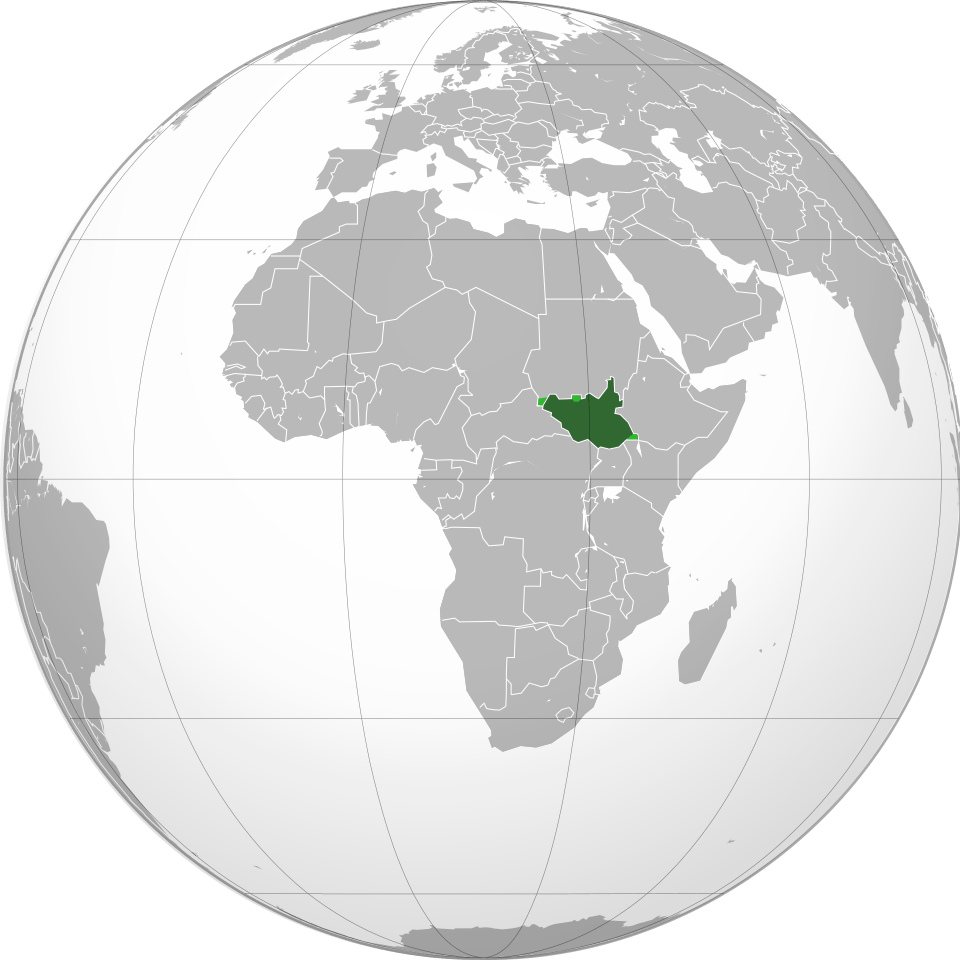
Even though the Second Civil War (December 2013 – August 2018) ended with the unity government of President Salva Kiir (* September 13, 1951) and Vice President Riek Machar (*1952), instability persisted and South Sudan faces a severe humanitarian crisis.
Around 7.8 million people (56% of the population) will experience high levels of food insecurity; over the past six months, children aged between six months and five years who suffer from acute malnutrition increased by 100,000 – 2.2 million in total; a further 700,000 children are at grave risk of dying.
The UN’s „Humanitarian Needs and Response Plan 2026“ of February shows more detailed the problems the South Sudanese face:
Climate Variability
– Since 2019, more than one million people annually have been affected by consecutive flash and riverine floods.
– In 2025, a severe flood-drought paradox occurred due to the lasting impacts of the 2024 El Niño event: parts of Greater Upper Nile, Unity, and Jonglei States faced extensive flooding which affected 1.3 million people and displaced over 375,000 as of end November 2025; at the same time, severe prolonged droughts ravaged in some northern and south-eastern regions.
The dual shock resulting from it „devastated crop production, decimated livestock, and further strained already scarce water resources“ (UN). Women and girls have been disproportionately affected as they are often responsible for water collection and food preperation (increased workloads, reduced access to essential services and increased exposure to gender-based violence). Gender inequalities deepened due to erosion of livelihoods.
Conflict
The dynamics of the conflicts are driven by political fragility, ethnic tensions, and competition over scarce resources.
– Greater Upper Nile and the Equatorias: since March 2025, government and opposition forces clash again which intensified instability.
– Upper Nile, Jonglei, Unity, and Western and Central Equatoria: widespread violence, caused by political polarization, throughout 2025. It resulted in the deaths and injuries of civilians, mass displacement as well as major disruptions to humanitarian operations and basic services.
– Conflict in Sudan: the influx of refugees from Sudan and negative economic impacts deepened humanitarian needs in the country. The counties affected by it were already highly vulnerable due to food insecurity, recurrent floods, and disease outbreaks (such as cholera).
– Inter-communal violence: driven by political fragility and resource competition, it escalated in 2025 too. In Jonglei and Upper Nile, the conflict between armed youth groups and rival communities evolved into large-scale, militarized assaults.
Duk County experienced coordinated raids in February, multiple civilians were left dead and dozens injured. In Eastern and Western Equatoria, similar attacks resulted in „heavy casualties, including among women and children, and triggered mass displacement“ (UN).
– Traditional disputes over grazing lands and water have turned more violent as well, leading to entrenched cycles of violence.
– The climate stress has contributed to severe human rights violations, „including killings, abductions, forced displacement, and pervasive sexual and gender-based violence, disproportionately affecting women and girls“ (UN).
Sudan Crisis
South Sudan has not only to deal with its own crisis, but also with that of its neighbour Sudan where the conflict entered its third year.
– April 2023 – November 2025: nearly 1.3 million refugees and returnees entered South Sudan. It is projected by the end of 2026, 380,000 more will arrive.
– Renk, Maban, and surrounding areas: the water systems, health facilities, and schools are operating at 300-400% of their capacity. Here, yet again, women and girls are disproportionately affected by the strain on services as they are often those who „shoulder caregiving responsibilities and face heightened risks of gender-based violence (GBV), particularly in overcrowded transit and reception centres“ (UN).
– Food and fuel prices: The interrupted cross-border trade and inflation have driven up the prices for food and fuel. Poverty is deepening among hosts and new arrivals, which increases tensions over land and resources. Humanitarian funding is declining and the resulting competition over limited assistance risks further instability.
– Sudans collapsing healthcare system contributes to the spread of communicable diseases such as cholera, measles, and hepatitis E. The cholera outbreak in South Sudan originated from Sudan.
Disease Outbreaks
– Cholera outbreak: In both scale and geographic spread, South Sudan is facing its largest cholera outbreak. As of end of November 2025, there were 96,000 cases and almost 1,600 deaths.
– Malaria: endemic diseases thrive due to recurrent flooding, making up a large part of illness and death nationwide. Between January and October 2025, there were 3.2 million suspected malaria cases and 784 deaths suspected to be malaria-related.
– Mpox: As of November 2025, there were 28 confirmed cases mainly in Juba County and some in Rumbek and Malakal. However, due to underfunded response team there’s no clear picture of the situation.
– Hepatitis E: Rubkona, Renk, and Fangak in particular are affected by Hepatitis E with more than 9,000 cumulative cases and a 1.3 per cent case fatality rate. This disease remains persistent in those flood and displacement-affected areas.
„These outbreaks are compounded by deteriorating public health infrastructure, including damage to 144 health facilities during flooding. Poor access to safe water and sanitation, coupled with overcrowded displacement sites, continue to heighten the risk of disease transmission.“ (UN)
– Acute respiratory infections and diarrhea diseases remain widespread too.
– While there have been cholera vaccination campaigns recently and vector control efforts, there still remain significant gaps in surveillance, reporting, and emergency response. Only 44% of the population has reliable access to primary health care.
It’s a bleak situation for South Sudan, but not insurmountable if it receives the necessary funding to strengthen its damaged healthcare system and is given attention regardless of other conflicts. While we, as individuals, cannot help everyone (limited time, money, etc.), governments do not have this excuse.
Sources
UN warns nearly 8 million face acute hunger in South Sudan as conflict deepens crisis
https://www.firstpost.com/world/un-warns-nearly-8-million-face-acute-hunger-in-south-sudan-as-conflict-deepens-crisis-14005514.html
Instability in South Sudan
(for background information, it’s worth the read)
https://www.cfr.org/global-conflict-tracker/conflict/civil-war-south-sudan
South Sudan: Humanitarian Needs and Response Plan 2026 (January 2026)
https://www.unocha.org/publications/report/south-sudan/south-sudan-humanitarian-needs-and-response-plan-2026-january-2026
Pakistan
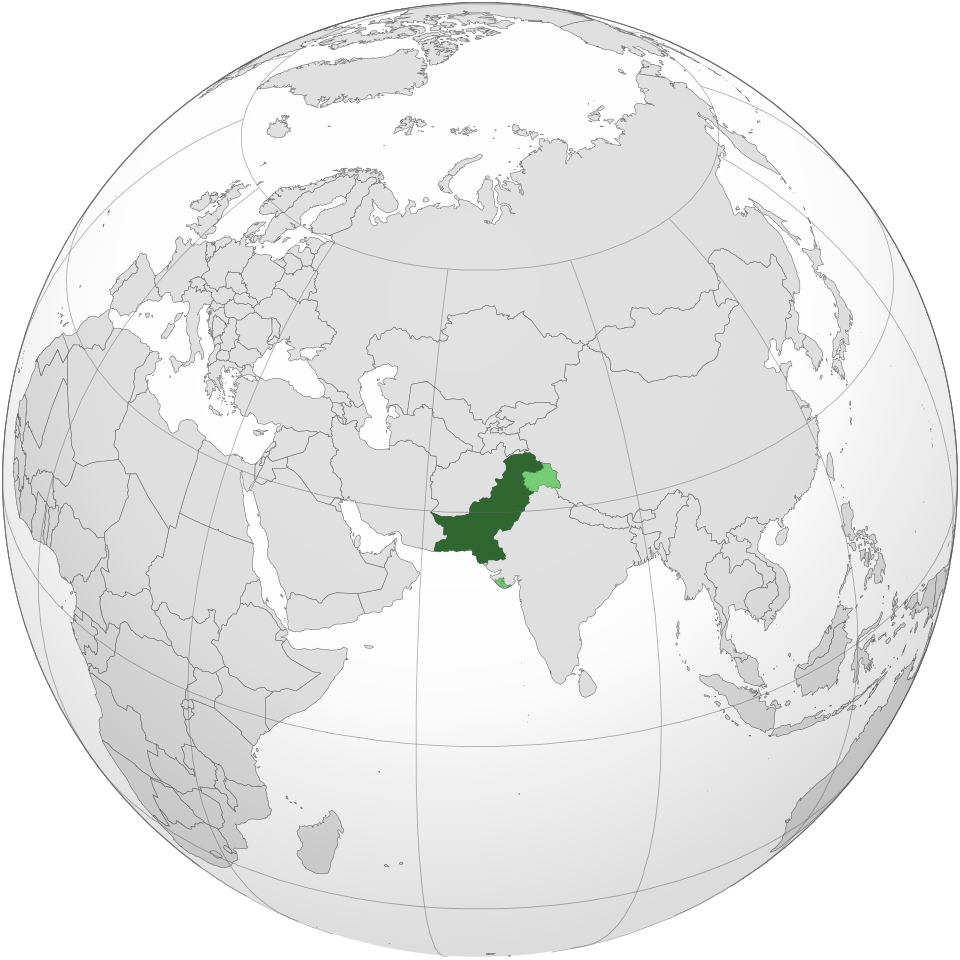
(Source: Wikipedia)
On paper, and by that I mean the Constitution of Pakistan, are all citizens equal under the law and deserve its protection. Unfortunately, women in Pakistan experience something entirely different on an interpersonal level and often fear the police station due to social stigma. It is condensed in the sentence: „Sharif larkiyaan thaney nahi jaati“, meaning „Good girls don’t go to police stations“.
In the article „This is the sentence that protects every abuser in Pakistan“, written by Manisha Ropeta which was published on May 12, 2026, in the media outlet Asia News Network, the author explains why that is and also talks about recent developments.
The author begins with the recount of an individual named Sana whose experience reflects a broader societal issue: this 26-year old woman was subject to four years of physical, emotional and financial violence at home. And now her husband threatened to leak private videos. However, it wasn’t the fear of the abuser that held her back, it was the social stigma which threatens her social standing as she would „no longer be considered respectable“. Whenever Ropeta talks to a woman or a family who went to the police station for a complaint, they first tell her: „We come from a respectable family. We have never stepped inside a police station.“ The act of going to the police requires a justification in their view. Instead of being an institutional space where you can report a crime, the police station morphes into a dangerous site where you jeopardize your social identity. Regardless of the crime, it’s always the same: „It is given when a woman’s husband breaks her arm at home in Larkana, she is raped by her employer in Landhi, threatened by her own uncles in Mirpurkhas, and even when she loses her life savings to some scammer bro sitting in Ratodero with a 5G connection.“
Ropeta writes, that this is classical patriarchal control over a woman’s mobility and voice. And since police stations in Pakistan „have been historically associated with male domination and crime“ and women are supposed to be modest, obedient and invisible in public spaces, women are left to indure injustices instead of being encouraged to seek remedy. This is quite dangerous, because of the magnitude of violence that is widespread and under-reported.
It is not just the constitution that should protect Pakistani women, but also criminal law.
The Domestic Violence (Prevention and Protection) Act and provisions of the Pakistan Penal Code consider physical assault and abuse as crimes serious enough that police can arrest the person accused of them and investigate (cognisable offences). It is therefore a crime, not a private matter. Yet, the reality looks different and the law comes second to family negotations, social calculations and weighing up reputational concerns.
| The Definition of Phyiscal Abuse, Sexual Abuse and Economic Abuse Excerpt (source: https://images.dawn.com/news/1194406/everything-you-need-to-know-about-the-new-domestic-violence-bill-passed-by-the-national-assembly) |
| Phyiscal Abuse – Repeated exhibition of obsessive jealousy causing repeated invasion of the victim’s privacy, liberty, integrity and security – Insults or ridicule directed at the aggrieved person – Threats to cause physical pain to spouse or other members of shared household – Threats of divorce or second marriage on baseless accusation of insanity or infertility – Bringing false allegation upon the character of a female member or any member of the shared household – Willful or negligent abandonment of the aggrieved person – Stalking – Harassment – Compelling the wife to cohabit with anybody other than the husband Sexual Abuse Any sexual act that “abuses, humiliates, degrades or otherwise violates the dignity”. Economic Abuse Includes the “intentional deprivation of economic or financial resources or prohibition or restriction to continue access to such resources to which [the] aggrieved person is entitled”. |
However, as grim as it may look, there’s been some improvements in Pakistan.
The author also wrote about Women and Children Protection Cells (WCPCs), 42 of whom have opened in all ranges and districts of Sindh to make crime reporting easier.
There’s been a significant increase in crime reporting, particularly for domestic violence, harassment and child abuse „by providing a relatively more sensitive and less intimidating environment staffed by female officers“. She provides one example: from January 1, 2025 to November 2025, the call centre 1715 WCPC received around 82,570 complaints online alone. Most of them were about domestic violence and harassment which were taken care of accordingly. One woman was accompanied to a police station after she made a call. Her husband had thrown hot tea in her face, „because he claimed she had served him in old utensils“. The husband was immediately arrested.
Moreover, there’s also a slow change happening in the attitude of police officials toward female victims: „Capacity-building sessions are held regularly on handling female complainants, victims of heinous crimes and other vulnerable groups. A front desk officer will pause and think before saying, ‘Aurat ne kuch to kiya hoga,’ as was the case before. (She must have done something).“ As more and more women become police officers, it also helps reshaping how women experience the system. Naturally, the stigma won’t change overnight, but it’s a beginning.
„Encouraging women to report violence is not a threat to social values; it is a reinforcement of the rule of law.“ – Manisha Ropeta
Sources
This is the sentence that protects every abuser in Pakistan
https://asianews.network/this-is-the-sentence-that-protects-every-abuser-in-pakistan/
Everything you need to know about the new Domestic Violence Bill passed by the National Assembly
(more details about the punishment too)
https://images.dawn.com/news/1194406/everything-you-need-to-know-about-the-new-domestic-violence-bill-passed-by-the-national-assembly
Science Section: Scientists discover why some cancers survive chemotherapy
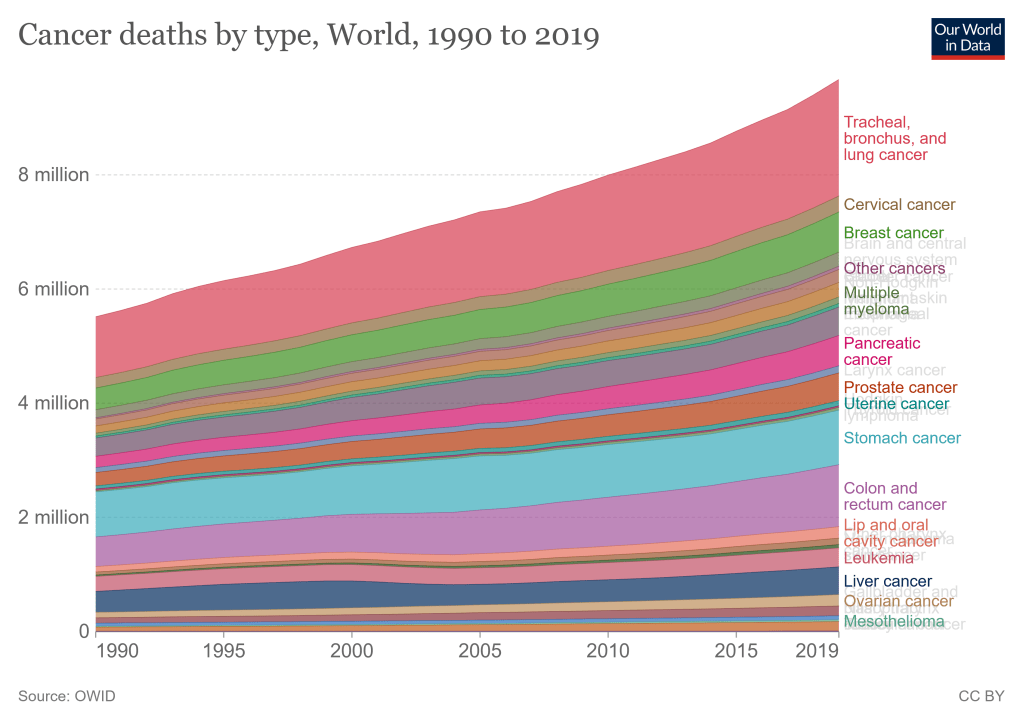
(Source: Our World in Data)
SD-Date: May 17, 2026
Et-Date: May 17, 2026
Science-Daily Summary: „Scientists have uncovered a surprising new trick used by one of cancer’s most notorious proteins. MYC, already infamous for fueling runaway tumor growth, also appears to help cancer cells survive by repairing their damaged DNA — including damage caused by chemotherapy and radiation. Researchers found that MYC can rush directly to broken DNA and recruit repair machinery, effectively helping tumors recover from treatments meant to destroy them.“
Open-Access Article: https://genesdev.cshlp.org/content/early/2026/05/14/gad.352832.125
The study was published in Genes & Development.
Senior author: Rosalie Sears, Ph.D.
Background
MYC is a protein that is abnormally active in human cancers and it has been studied for decades. Usually, the protein works inside a cell’s nucleus, „switching genes on to drive cell growth and metabolism“. So, what makes this research different is that the research team at Oregon Health & Science University (OHSU) uncovered a function that wasn’t fully understood before. The Science-Daily summary already mentioned it: the direct involvement of MYC when DNA is broken, whether it is because of tumor growth or cancer treatments that are meant to break the DNA of cancer cells. It is considered an untraditional role for the MYC Protein to pyhsically go to the sites of DNA damage.
Normally, DNA repair is essential for healthy cells. But it becomes a challenge when it appears in cancer diseases like pancreatic cancer – one of the deadliest forms of cancer.
Both chemoterapy and radiation rely on overwhelming cancer cells with DNA damage.
So, if a cancer cell is very good at fixing the damage it received throughout the therapy, it can not only survive but also keep growing afterwards.
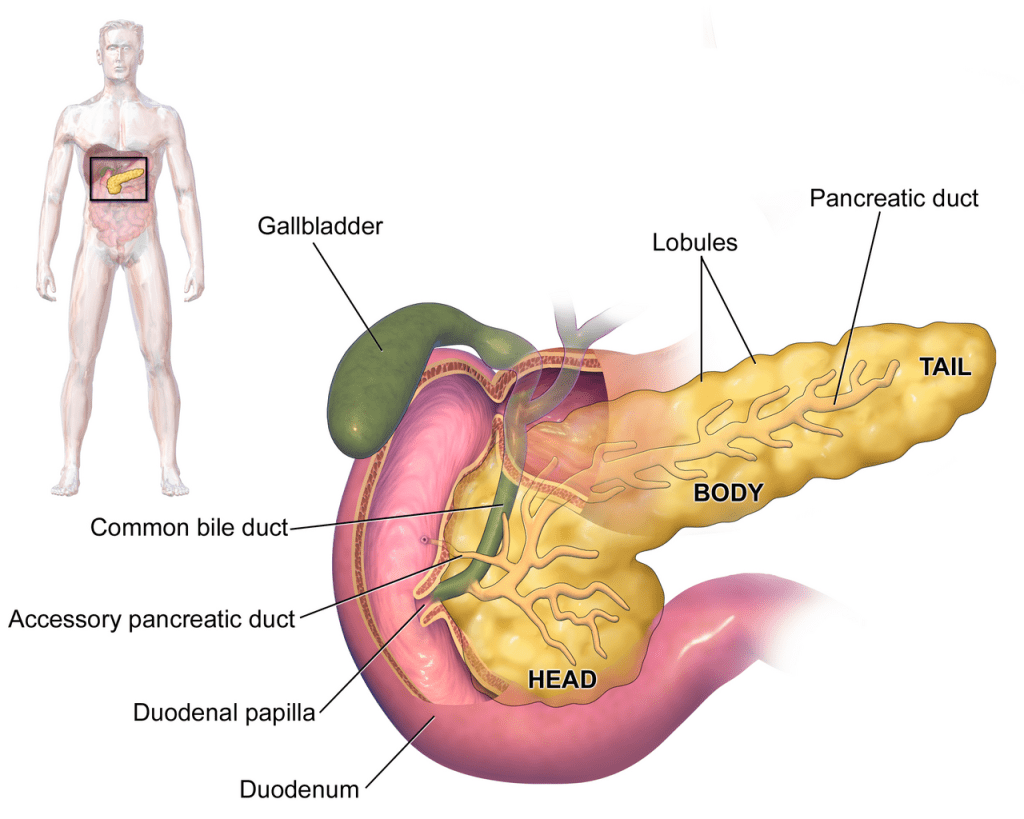
| The pancreas lies behind the lower part of the stomach. It’s an organ that helps us to digest food and makes hormones that manage blood sugar. The most common type of pancreatic cancer is pancreatic ductal adenocarcinoma. Unfortunately, at its early stage it is rarely found because it doesn’t cause symptons until it has spread to other organs. Source: https://www.mayoclinic.org/diseases-conditions/pancreatic-cancer/symptoms-causes/syc-20355421 |
Findings
It was long considered „undruggable“ due to the structure of the protein, since the drugs wouldn’t be able to bind safely without affecting healthy cells. The new role that has been now identified may make it easier to target the protein.
„MYC is one of the two most important oncogenes in all of human cancer,“ Sears said. „If we can interfere with MYC’s role in DNA repair — without shutting down everything MYC does in healthy cells — we may be able to make cancer cells more vulnerable to treatment.“ (Science Daily)
Through tumor data and pancreatic cancer cells from patients, the team found that cancers with high MYC activity showed increased DNA repair activity and worsened the outcomes for patients.
In pancreatic cancer, MYC appeared to help tumors tolerate extreme stress from rapid growth, poor blood supply and chemoterapy.
A short-term study is already underway.
Patients with advanced pancreatic cancer „undergo biopsies before and after receiving a drug called OMO-103“. The aim of this study is to better understand how tumors in real patients react to the blocking of the MYC-Protein.
Meaning
It would be great news if this discovery leads to a better treatment – or even cure – of pancreatic cancer and other cancers. And it also shows why the sciences remain so important to us and our civilization. A medical checkup is also highly important!
If you can do it, you should.
Sources
Scientists discover why some cancers survive chemotherapy
https://www.sciencedaily.com/releases/2026/05/260515233329.htm
Cancer-causing protein also helps tumors repair their DNA
https://news.ohsu.edu/2026/05/15/cancer-causing-protein-also-helps-tumors-repair-their-dna
Pancreatic cancer – Overview
https://www.mayoclinic.org/diseases-conditions/pancreatic-cancer/symptoms-causes/syc-20355421





Kommentar verfassen